RDTI webinar series


Innovation in Focus: R&D Tax insights across Agribusiness, Food and Beverage
Client AlertR&D Tax Transparency insights driving innovation in Australia’s agribusiness and food sector.
The Remarkables podcast: Stories of people improving communities and inspiring youth. Listen now.

The RDTI is the Federal Government’s flagship program designed to encourage companies to undertake research and development activities in Australia. The program is available to eligible companies across a broad range of industries and business models, from early-stage innovators to large established corporates, provided the legislative criteria are met.
The RDTI provides two primary forms of support:
Companies with aggregated turnover of less than $20m (applying the grouping rules) may be eligible for a refundable tax offset equal to the company’s corporate tax rate plus an 18.5 per cent premium.
For many early-stage and growth-focused businesses, this may result in a cash refund from the ATO, providing a valuable source of funding to reinvest in innovation.
Companies with aggregated turnover of $20m or more (grouping rules apply) may be eligible for a non-refundable offset, which can be carried forward to future income years if not fully utilised. The offset is calculated by applying the company’s corporate tax rate plus a tiered premium based on the company’s R&D intensity for the year:
This structure is designed to provide increased support to companies that invest more intensively in R&D relative to their overall operating expenditure.
To access the RDTI, companies must register their eligible R&D activities with the Department of Industry, Science and Resources (DISR) within 10 months of the end of their financial year in which the activities were conducted.
For companies with a 30 June year-end, this means the deadline to lodge the 2025 R&D application is 30 April 2026.
Failure to register by this date generally results in the permanent loss of the RDTI entitlement for that financial year. While extensions of time may be available in limited circumstances, they are not automatic and should not be relied upon.
The RDTI is a self-assessment regime. As part of the registration and claim process, companies must carefully consider the eligibility criteria, relevant legislative provisions, and current guidance issued by DISR and the ATO.
It is also critical that appropriate contemporaneous documentation is maintained to substantiate the claimed R&D activities and expenditure in the event of a review or audit.
We have also released a two-part RDTI webinar series offering practical insights into how the incentive operates in practice and current areas of regulatory focus.
Our national team of RDTI specialists work closely with companies to support them across every stage of the RDTI lifecycle, from initial eligible assessments through to registration, claim preparation and managing reviews.
We support clients with:
If you would like to discuss your FY25 R&D activities or require support in preparing for the 30 April 2026 registration deadline, please contact our RDTI specialists.
Our team can assist you in navigating the requirements and preserving the potential value of your R&D investment.
Article contributed to by Amy Jackson - Innovation Incentives

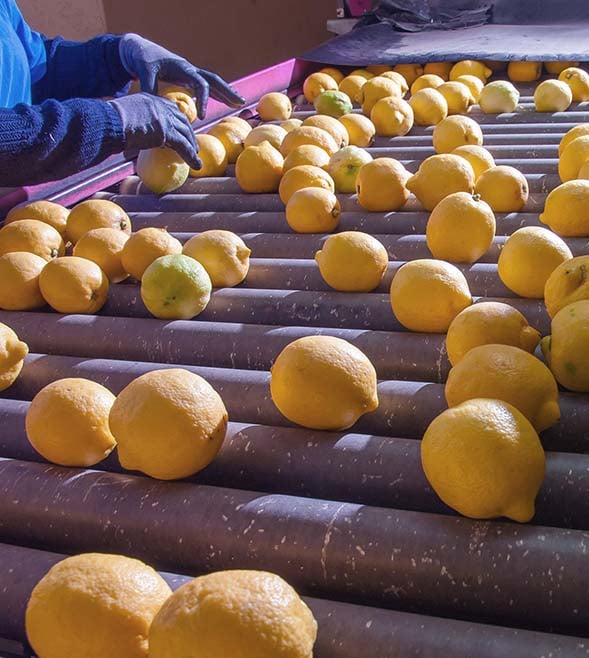
R&D Tax Transparency insights driving innovation in Australia’s agribusiness and food sector.


The 2025 financial year marked a dynamic chapter for Australia’s Research & Development Tax Incentive (RDTI), with notable shifts in policy, compliance, and industry engagement. As innovation continues to drive economic growth, staying informed on the evolving R&D landscape has never been more critical for Australian businesses.

The biotech industry faces significant challenges, including regulatory pressures, supply chain disruptions, rising costs and shifting investment landscapes.

