Upbeat intro music
Rebecca Archer
Welcome back to another season of The Remarkables podcast! This series is about highlighting remarkable stories of people who are making positive contributions to their communities – within Australia as well as around the world.
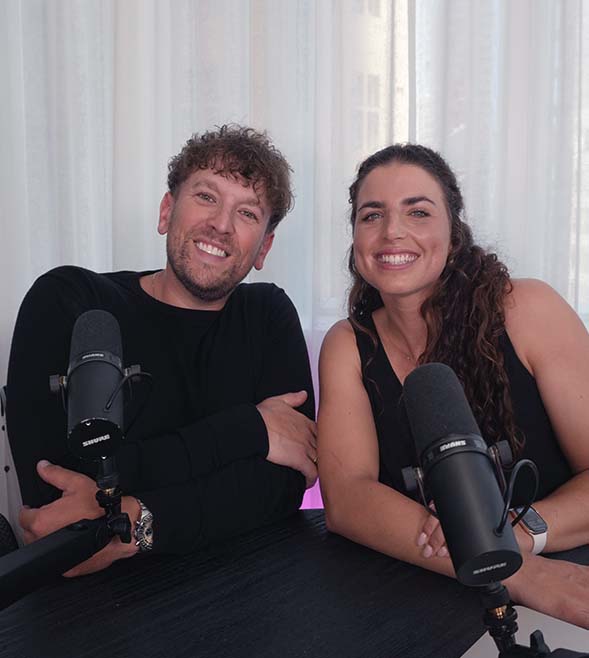
Last year, we had the privilege of learning from some truly extraordinary people. From refugee women building financial independence through SisterWorks, to the trailblazers empowering girls to lead through Play Like a Girl, to the global voices shaping a more sustainable future at the UN Global Compact. We even listened into an inspiring chat between Jessica Fox and Dylan Alcott, reminding us of what’s possible when passion meets purpose. We’re thrilled to be back for another season to share remarkable stories that inspire our people, clients and community to create meaningful impact.
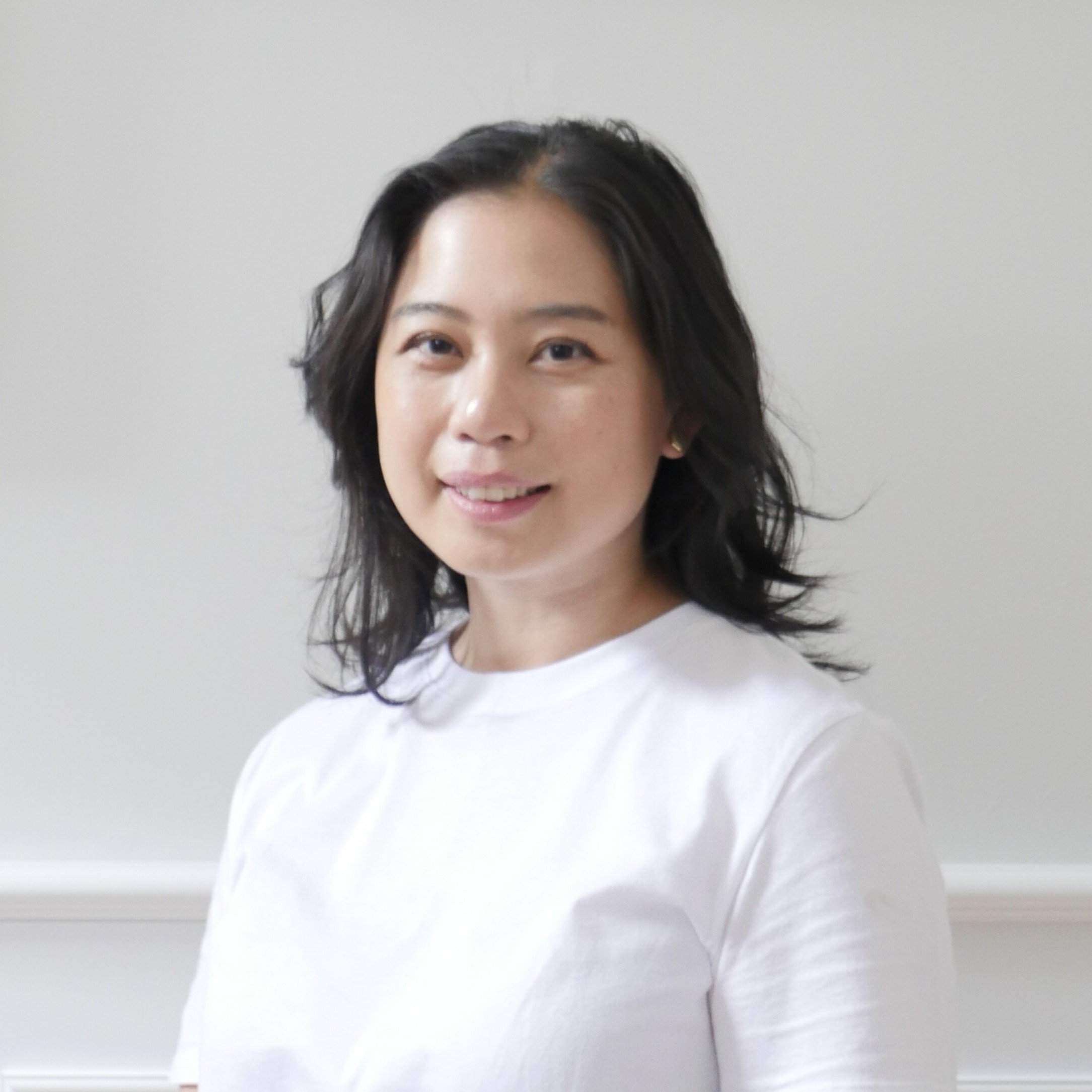
Our first guest for 2026 is Joyce Jiao, Founder of Herekind – a platform to help grieving individuals and families with the estate administration that comes after losing a loved one. Inspired by her own journey of grief, Joyce left the corporate world to help others going through the hardest times in their lives.
Welcome, Joyce!
Joyce Jiao
Thanks so much for having me, Rebecca.
Rebecca Archer
To kick off this episode, we're going to jump straight into a bit of a rapid-fire round. So, I will ask you some questions at random where you can respond with just whatever comes to mind.
Joyce Jiao
Of course.
Rebecca Archer
All right, so first of all, what's the most remarkable advice that you've ever received?
Joyce Jiao
So early on in my career, I was pretty shy, and not sure if you can tell from my name, but culturally it's hard to speak up. So, I actually went the first part of my work career being pretty quiet until someone said to me – and this is the remarkable advice – is to have an opinion, Joyce. Like, we pay you for your insights. Uh, and that kind of really pulled me out of the moment where I stepped out of that shyness and started sharing what I thought more vocally.
Rebecca Archer
I wonder also when you were young what you wanted to be when you grew up?
Joyce Jiao
I wanted to be a tour guide. I love traveling and I just love you know, the welcoming of the tour guide at the front of the bus, and I wanted to be that person.
Rebecca Archer
That's not an answer that we get very often. I love that. All right, and finally, for the rapid-fire round, what is your go-to coffee order?
Joyce Jiao
I drink instant coffee these days. Mum of two young boys, so any caffeine is good.
Rebecca Archer
All right, now tell us about Herekind. So, what's the origin story? When was it founded? Let's just hear all about it.
Joyce Jiao
Well, it started – let's say – 15 years ago. It took 15 years for my granddad's estate to settle, and we just settled it in August of last year, and I saw firsthand the emotional toll it took on my family. It's just such an overarching theme of the administration, the family communication, and then ultimately the family breakdown that it led to, and I was working in banking at the time, and I could see an opportunity to use tech to at least take away the administrative burden for families so that they have more space to focus on the grieving and the relational aspect.
Rebecca Archer
So overall, what does the organisation aim to achieve?
Joyce Jiao
The large vision is for every Australian to be supported after loss, both emotionally, but practically. A lot of families that we worked with in building the platform had told us that they felt their hands were held through the funeral, but that dropped off after the funeral. So, it's that next 12 to 18 months of settling the estate where you feel completely lost and alone that we walk with families through that journey.
Rebecca Archer
In your research, what sort of pain points do families usually face during this process of estate administration? What are some examples?
Joyce Jiao
It's confusing, it's lengthy and expensive. So, families often don't realise, but after someone dies, there's a lot of paperwork involved, and what happens is that the process of finding all the assets that person had, claiming all of their accounts – it's administratively heavy right in the middle of their acute grief. So, it can be extremely overwhelming and financially stressful.
Rebecca Archer
And how have you tried to address those sorts of things through Herekind in a practical sense?
Joyce Jiao
At first, we thought we could build Herekind just as a tech platform – automate the admin – but as we walked through with our families, we realised that it had to be human-led, tech-enabled. So, families, I mentioned before, want to feel like their hands are being held. So, we've got a bereavement concierge team that comes alongside families and talks them through the process while our tech automates the admin and the paperwork, and then lawyers, instead of filling out paperwork, they're freed up to provide the legal advice. So, we estimate we can save families about 50 hours or $3,000 in legal fees.
Rebecca Archer
That's phenomenal, especially at a time when they're obviously going through a lot of emotional turmoil and expense if they've had to try to cover funds for funerals, etc.?
Joyce Jiao
Yes, yes, 100%. So, I think like the one thing we found through the process is people are paying out of pocket for expenses related to the death or for just upkeep. For instance, keeping the house insured or putting everything in storage. If there's a widowed parent, potentially their living expenses as well, and every delay in the estate means that you're not getting paid back that money. So, it can be really financially stressful.
Rebecca Archer
What's one thing that people might be surprised about when it comes to estate administration? And I mean, there's a lot of people listening who probably have never had to encounter this. So what do you sort of see as people being surprised by in this process?
Joyce Jiao
That's such an important question to ask because most people will go through it at some stage in their life. They'll have to settle an estate for someone, and we all have our own estate that someone else needs to tie up after we die. So, the short explanation is that after someone dies, everything that they owned and owed has to be tied up. So all of your assets, all of your liabilities have to be found and gathered.
You pay off those liabilities, and then the net assets – so what's left – becomes the inheritance, and then tax – taxes are part of that. So, tax might be a liability that you need to settle before closing off the TFN. Or there might be a tax refund that that person hadn't claimed before they died that goes into the estate and becomes part of those assets that are eventually distributed to the beneficiaries.
So that's the short answer of what's involved, and then we're trying to address the messy middle of actually doing those tasks in between.
Rebecca Archer
As you say, the administrative process is quite big, and even things like being able to obtain a death certificate, which is a really important document to be able to go and close a bank account on behalf of someone, for example.
Joyce Jiao
Yes, it is. Like, I think a lot of people don't realise that the death certificate can take 4 to 6 weeks. It can be a long wait. Yeah, I mean, there's so many things that we can unpack because we do find it's often the eldest daughter that this responsibility falls on.
You know, often they're the person who holds everyone together in the family and they might have been the carer for the parent before they passed and then they're trying to juggle their own work, maybe a family of their own, and, you know, it's really that, at that sandwich generation point when this all come, and it's a huge, it's a huge amount of stress on that point person.
Only about half of all estates in Australia go through probate, and so what we're trying to do with Herekind is unbundle legal services. I came across this term in a paper around how if you can let families have a guided way of dealing with admin themselves and then free up the lawyers just to provide legal advice and, and if there's any litigation, represent the estate on that front, then you can save families quite a lot of money from a legal fee perspective.
Rebecca Archer
What about in your own journey? And I'm imagining that there was a lot that kind of affected you and surprised you about this whole process because of, you know, you wouldn't have gone and started HereKind if it wasn't for it being quite a pivotal thing to go through in life. But yes, what sort of came across your path?
Joyce Jiao
So, my dad was formally the executor and supporting him through but not being able to do a lot of things. For instance, that burden falls on the point person, as I said before, and the executor, and often you can call up an institution for them on their behalf, but then they'll say, I still need to speak to the executor, and that can be really difficult for people to say.
Like, often I'm so close to the person, I have to retell the story of the death over and over again, and you can't shield or protect that person from, I guess, some of the trauma of the bureaucracy. Yeah, through that process. So that's really, really difficult, and I think maybe the other thing is also the surprise at how grief manifests in very surprising ways and for different family members, and yeah, that can, that can make it really difficult.
Like, all forms of grief are valid, but I didn't know that, so now I know, you know, anger and guilt and numbness – they're all part of it. So, you know, people react in very strange ways, and that's because of the grief. So now that I know, I think there is a better capacity for grace and understanding for people's reaction, and I just wish that we were a more grief-literate society. I wish everybody knew that.
Rebecca Archer
Yeah, it's a really good point that you raised there, and it's also one of those things that we don't really talk about too much, and conversations about estate planning or inheritances and people's wishes just don't get brought up and discussed because it's seen as almost a taboo topic or an uncomfortable topic.
But I wonder, do you have advice for people?, You know, how do you start these difficult conversations or when should they be had?
Joyce Jiao
You're absolutely right. We're coming against this huge cultural taboo and it's almost like to say in my culture, sometimes talking about death brings about a sense of being jinxed, or you're bringing on death to someone. It can be really difficult.
I think for me, the most effective thing I've done is to make my own plans for my death and then talk about them to my family. So, you know, this is where my will is, this is what I've got, this is the arrangement for the kids, and that naturally prompts a oh, this is what I have and this is what I haven't thought about, so maybe I should go do that.
When you make it more about yourself, then that can open up the conversations better, but I think also the flip side of that is also just acknowledging that people have different capacities to deal with it. Not everyone wants to talk about it, and we have to respect those boundaries as well.
Rebecca Archer
It can be a very difficult balance to strike, I think, because everyone is so different and handles things differently. I wonder if we can look at the Herekind platform, and you mentioned before that you do have a big human element there, which I guess it's impossible not to for this particular topic, but what parts of estate administration does Herekind automate versus the human support and care that is still needed there?
Joyce Jiao
I think maybe the first thing I'll start with is we found we couldn't put a tech tool in front of grieving families and expect them to know how to use it. So, we lead from the human side with the bereavement and the educational side of things. So, there's a lot of education in the platform around what is an estate, what is an executor, what is probate, and this is all designed with our partners Griefline and our estate lawyers to be really grief informed.
So, we're writing them in accessible English. Your cognitive capacity when you're grieving is temporarily lowered, so people need to look at information several times, and it can take a while for it to sink in. So, we've designed it to be first, okay, understanding where you're at and what you're doing before we give you the tools, and then as to the tools and what we actually automate, there comes a time when you have to investigate what that person had in terms of assets and liabilities.
So, you might be going through their filing cabinets or their email, their computer. So, every estate created on Herekind has a unique email address. You can forward through emails, or you can just scan and upload documents, and it will automatically read through those documents and sort them into assets and liabilities – what's in the estate, what's not.
So, you can start to understand, oh, Mum had a joint account with Dad and that's not part of the estate, but I still need to make sure that that gets transferred over to Mum's name from a paperwork perspective, and that just gives people a really quick way of understanding how big is the estate, do I need probate or not, and then all of their documents are organised if they do need probate and if they do need to see a lawyer, so the lawyer's not having to spend those first few hours sorting the paperwork for them, and then we have other things such as we've got account closures.
So, for billing and subscription companies, our bereavement concierge, if you empower them to do so with a letter of authority, we can then contact those companies for you and close or transfer those accounts so that expenses aren't building up in the estate while you're sorting it all out.
Rebecca Archer
That's brilliant. I imagine that with a platform like this, once it's created, you're constantly looking at new ways or hearing feedback from people who've been using it that, oh, this, this was helpful, but this could be better. Do you find that it's a work in progress and you're always updating?
Joyce Jiao
100%, it's a work in progress because what we're trying to simplify is something that is very messy currently. So, I think what I'm really proud of is that we do talk to families every week as part of building the platform, and so it's really been user-informed throughout the entire design process, and, you know, we have found things that haven't worked.
So, for instance, last year, very early on in the process, we built a database of all of the deceased estate forms across institutions, and then the platform can automatically fill those out for you, create a stat deck if there's different names, and we thought that would be a great way of simplifying the process for people. But then when we put it out in front of families and noted that you still need to print these, you still need to sign them, you still need to attach the death certificate and get that certified and send this off in the post, it got confusing for people. So, I guess our customer group, I suppose, of grieving families, we just felt like there was more work to be done in the UX and in simplification. So that is a feature we haven't released with this first launch.
So, we are learning all the time, but I'm confident that what we put out here is genuinely useful for people, and then when we put things out, that we have done the testing beforehand to make sure it's genuinely useful.
Rebecca Archer
Herekind have been working on the Cost of Closure report – seeking to capture the practical and emotional pressures presented by the current estate processes in Australia. What can you tell us about the results?
Joyce Jiao
The purpose of us going out and asking for this data from, from people – it was twofold.
So, we did a social value measurement workshop with Australian Unity, and we really wanted to measure with Herekind whether we are genuinely helping families or not and creating social impact, and then the second part of that is what data can we use to go out there and advocate to government and to financial institutions and other large organisations to simplify their processes, and we knew beforehand because we were talking to families every week that qualitatively that it was really stressful, but it was – you have to use data when you do the advocacy work, and so what we found was that it was worse than we expected.
So, it's emotionally stressful – everyone knows that. 79 per cent of people reported moderate to severe emotional stress, but what we didn't expect was that 73 per cent of people reported moderate to severe financial stress through the process.
You know, like the estate, technically speaking, it reimburses you for any costs related to the estate, but the time it takes to settle the estate is when people are personally out of pocket, and most people – 51 per cent of people – were out of pocket into the five figures. For that middle market, it's, it's a lot of money, and it's a lot of time waiting to be paid back.
Rebecca Archer
How many people did you interview, and where were they from? Was it sort of across the country?
Joyce Jiao
Yeah, so we had about 160 to 170 people respond to the survey, and it was a demographically representative population across all states and territories.
Rebecca Archer
Were you surprised by what the figures showed?
Joyce Jiao
I was very surprised. I think maybe because we work so much with lawyers in building out the platform, and sometimes that skews your perception because I suppose lawyers have families who can afford their services, and sometimes it's really the – I didn't realize potentially that it was that underserved market that was not represented in some of those conversations we're having early on in the process. So yeah, very, very surprised.
Rebecca Archer
I'd love to ask if you have any particular stories about things that have stayed with you from this work that you've been doing, some really touching or inspiring moments that have evolved out of this work that you're doing.
Joyce Jiao
It's actually the, the worst stories that spur us on, how hard it currently is. So why there needs to be changed. So, for instance, actually one of the most – the best quotes someone said to me was, you know, this is all stuff that should have been taught in school. It's like budgeting, it's a basic life skill, but no one teaches it to us, and then what – and then death is taboo, and then what happens is that people have to do all this paperwork after someone dies and it causes unnecessary grief. The other thing that really inspires me is just the fact that knowing that by using tech to do this, we can reach more of the underserved market. So, people who don't qualify for legal aid, but lawyers are too expensive.
So, that middle market space where they're completely just lost and in the dark wading through this work, through tech we can make that more accessible for them, and then we can add things such as multilingual capabilities and hopefully multicultural capabilities in there as well over time.
Rebecca Archer
What kind of feedback do you hear from people when they've engaged with this service that you're providing? What are the sort of common themes that come back to you?
Joyce Jiao
It's really easy to use; it's intuitive, and also this is going to save us from so many fights in the family. This is going to engage us all and help me communicate to my family what's needed. One person recently said to me – a widow – she said, I don't even need to see the platform because I know that it's already better than what's currently out there.
So, I think it's just the making something that is confusing and complex in a time of grief easier. I think that, yeah, the overall work, yeah, that really, that really drives us, and I think it's that it's, it's important work.
Rebecca Archer
Some people might consider the work that you're doing in the space that you're working in to be just inherently sad. Do you ever get, I guess, that prolonged sense of melancholy, or is it the opposite where you actually get inspired and are quite hopeful because you know what you're doing is making a difference?
Joyce Jiao
It's both. So, we are working with death, and we are hearing sad stories every day. I think it being part of the Griefline network really helps with that in terms of we can access emotional support and we have been given some of those tools to manage being in that grief space, but yet at the same time, sometimes when people talk about, oh, there's so much paperwork, or the bank asked for this and then the super fund asked for this and that does make me hopeful because it shows that it's a problem worth solving and that we are working towards that.
Rebecca Archer
So, what's next? Do you have any goals for 2026? Where do you want to see the organization in maybe 5 years or so?
Joyce Jiao
2026 is the year that we focus on more of – so we're working on a few partnerships with First Nations groups that I'm really excited about that, and then also being a second-generation migrant myself, some of the multilingual capabilities that I talked about earlier.
So those are our more immediate priorities, but in 5 years' time, this is going to be hard to quantify, and I talk about this with people in the social impact space all the time, but I would like to quantify the amount of unnecessary stress that we save families, and can Herekind play a role in reducing or avoiding family conflict?
And also, the other thing is whether we can play a large role in driving down the cost of estate administration in Australia.
Rebecca Archer
Those are some great goals to have. And what makes you most proud, or what has been inspiring you and motivating you to continue this and to make this your life's work?
Joyce Jiao
The way I think about it is – so I'm from finance, I'm from banking. In that industry, people talk about the great wealth transfer that's coming through in the next 20 years, right? And it's kind of like, oh, there's so much money coming through, you know, we're all going to be benefiting from that, but then what I think about is why are we having the great wealth transfer? And you look at the underlying reason why, and that is because we're going to be approaching peak death.
So, the amount of deaths are going to be doubling over the next 20 years, and so what that means, what that says to me is that the next 20 years is actually going to be – for our society – a great loss, and so it becomes about more than just money, and I'm just like tearing up a little bit. It's just, just thinking, knowing that we have this wave of loss that's going to come through society, and we will be having, you know, family breakdowns and confusion, and a lot of people will be experiencing sadness and a huge shift in, in their life from losing a loved one.
So, I think we know that this wave is coming and it's a chance and an opportunity for us to build a more resilient society and build, I guess, like this, you know, financial literacy has really increased over the last few years, but I think the next leg of that is inheritance literacy, and then women are more impacted in the space, you know, about 60 per cent of executors are women. Women carry a lot of that load, and so how can we ensure that this great wealth transfer, this great loss that's coming into our society, can be something that it doesn't have to happen with family breakdowns, and it can happen in a way where people can deal with their grief in a healthy way and be able to then can move forward and grow and apply that wealth in a way that feels good and in a way that puts their well-being financially and emotionally at the forefront.
So that's going to be what drives me for the next few years.
Rebecca Archer
Joyce, if people would like to hear more about Herekind, maybe get involved or share the word, what's the best way for them to find out more?
Joyce Jiao
Yeah, so, um, send us an email. Our email is hello@herekind.com.au. Herekind is short for ‘here is kindness’, so just remember that. Yeah, just get in contact. We're really keen to chat and we, we love talking to people through this work, so please reach out.
Rebecca Archer
Next month, we are excited to premiere our new memorable highlights ‘best of’ series. Every second month, you can expect to hear from previous guests who have catalysed and created change or positively impacted their communities to shape better futures.
We look forward to sharing bitesize highlights from our previous favourite conversation across 2026.
If you liked this conversation, you can find more on the Grant Thornton Australia website. I’m Rebecca Archer – thank you for listening!
Upbeat outro music