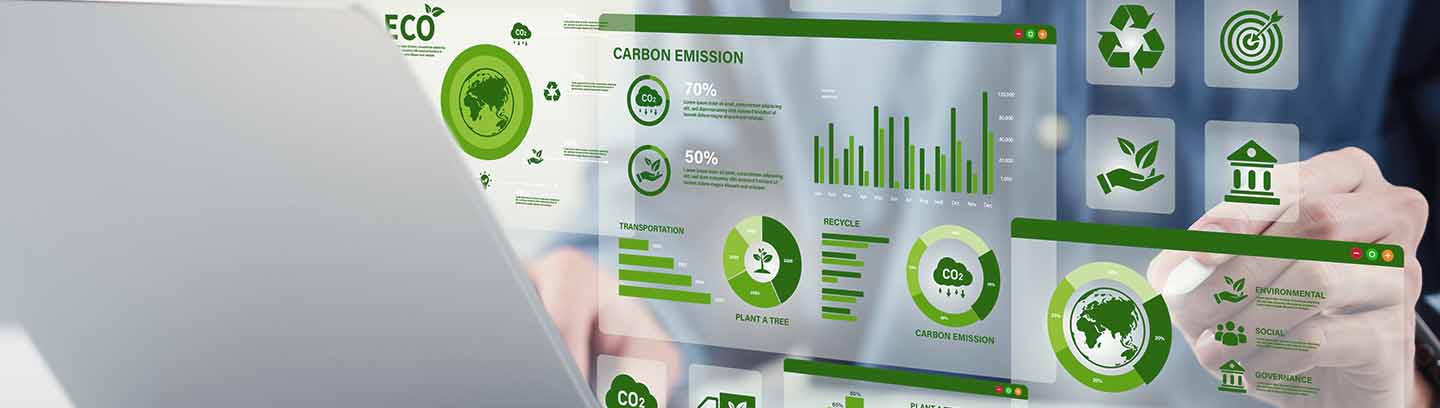
Mandatory sustainability reporting in Australia and increasing investor scrutiny mean businesses need robust, compliant systems to measure, manage and disclose emissions across scope 1, 2 and 3.
Modern carbon accounting platforms enable rapid implementation, automated data collection, supplier engagement and real‑time insights.
Cost‑effective, scalable solutions that integrate with finance systems and are easy to use improve data quality, stakeholder engagement and link carbon performance with financial outcomes.
As Australian businesses face increasing pressure to manage and reduce their carbon footprints, selecting the right carbon accounting software has never been more important.
Contents
With complex regulations and growing stakeholder expectations, the right solution can help your organisation stay compliant, make informed decisions, and demonstrate real progress.
Mandatory sustainability reporting
Mandatory sustainability reporting has been legislated in Australia, and investors increasingly rely on sustainability information to assess risk, resilience and long‑term value creation. Sustainability reporting helps organisations identify, measure and manage climate, environmental, social and governance risk. Beyond compliance, sustainability reporting provides actionable insights into operational efficiency, supply chain resilience, resource use and long‑term growth opportunities.
Comprehensive scope 1, 2, and 3 emissions reporting
The GHG Protocol classifies emissions into:
Scope 1: direct emissions from owned or controlled sources
Scope 2: indirect emissions from purchased energy
Scope 3: all other indirect emissions across the value chain
Reporting on all three scopes is critical in enabling organisations to measure, manage and disclose a complete view of your emission footprint and climate impact, while meeting external expectations and support long term risk management and strategy.
A robust carbon accounting platform should support your organisational needs and enable reporting across all three scopes. This will streamline data collection and enable timely responses to stakeholder inquiries if your organisation requires this. This also facilitates transparent communication of sustainability progress across internal teams and external partners.
Below are the key features to look for when evaluating carbon accounting solutions for your business.
Time is of the essence when it comes to emissions tracking. Ideally, the chosen software should be easy to deploy and come with personalised onboarding support. Not only does this ensure your carbon accounting journey starts on the right foot, but it allows you to generate valuable insights quicker.
While spreadsheets can be a useful short‑term solution, they often fall short as a business grows and reporting requirements increase. Over time, manual data consolidation can mean information is outdated by the time it’s reviewed, limiting its value for timely decision‑making.
By contrast, businesses that move early to easy-implemented platforms that automate data collection can identify high‑impact emissions sources within weeks and act within the same reporting cycle. Delaying implementation can result in lost momentum and reduced credibility, whereas quick deployment enables early wins, builds internal confidence and helps keep sustainability initiatives on track.
Understanding your supply chain is essential always, including for effective emissions management. The software should provide tools to engage suppliers, benchmark their performance, and access a vetted database of sustainable vendors. This helps identify opportunities for collaboration and improvement across the value chain.
For many organisations, Scope 3 emissions represent most of their footprint. Many businesses find a significant portion of their emissions sit within their supply chain, yet they lack consistent ways to collect, compare or act on supplier data.
The key is to shift focus from simply requesting information to collaborating on reduction opportunities. As emissions transparency becomes an expectation rather than a differentiator, limited supplier engagement can increase the risk of exclusion from tenders, contracts or supply chains.
Carbon accounting solutions vary widely in price. It’s important to choose a solution that aligns with your budget and existing finance systems, while offering scalability to grow with your organisation’s needs. A key consideration is looking for flexible pricing models and modular features, allowing you to expand functionality as your sustainability goals evolves.
It is also important to consider how the carbon accounting software will integrate with your existing technology ecosystem. Strong integration with your Enterprise Resource Planning software, general ledger and procurement platforms reduces manual data entry, improves data quality and enables emissions reporting to meet the same standards of accuracy and auditability as financial reporting. This integration not only saves time but also helps you link sustainability outcomes with financial performance.
When sustainability data sits outside core systems, it is challenging to consolidate it alongside your financial numbers. Without integration, sustainability reporting can add weeks of manual reconciliation, creating frustration and errors. Ensuring emissions data can flow directly from existing finance systems, can reduce reporting time and allow you to assess cost and carbon side‑by‑side.
Integrated systems turn sustainability from a compliance burden into a management tool. Without integration, businesses may face higher costs over time through duplicated software and manual efforts.
As Australian sustainability regulations have been newly made mandatory and continue to evolve, businesses need software that can keep pace with changing standards and emissions factors. An agile and up-to-date platform supports regulatory disclosures, third‑party audits, and internal reviews by regularly reflecting legislative and industry updates.
Even the most advanced software should be intuitive and easy to use. If sustainability data lives in complex spreadsheets that only one or two people in the business understand, the organisation is exposed to a continuity risk. Businesses that adopt intuitive platforms with dashboards and shared visibility make sustainability a team sport – not a specialist function.
When evaluating different carbon accounting software, looking for a clean interface which reduces the need for extensive training and encourages adoption across departments. Additionally, the platform should offer visual insights and progress tracking to engage stakeholders and drive accountability. Data needs to be easily understood to add value.
Choosing the right software
The right carbon accounting software for Australian businesses should combine technical precision with usability, support and alignment with your organisation’s strategy. By selecting a solution that meets these criteria, organisations can confidently manage their carbon footprint and contribute to a more sustainable future.
We’re here to help
At Grant Thornton, we work closely with mid-sized businesses to integrate sustainability into the core of their operations. Our team supports clients through:
facilitating and implementing carbon accounting solutions
conducting carbon calculations to help quantify emissions and identify reduction opportunities
embedding sustainability strategy into the broader business strategy to ensure alignment with long-term goals
developing sustainability-focused dashboard reporting for management teams, enabling clear visibility of performance and progress.
Our team of advisers help businesses build resilience, meet stakeholder expectations, and drive long-term sustainable growth through innovation. If you're a mid-sized business looking to embed sustainability into your operations and unlock new opportunities for growth, we’re here to help.
Let’s start the conversation and explore how innovation can power your sustainability journey.
Article contributed to by Vanessa Ziino – Private Enterprise
Tax has always been a fundamental part of how businesses contribute to society. Its role within the Environmental Social Governance (ESG) space is starting to build strong momentum. As organisations sharpen their focus on ESG outcomes, tax considerations and the governance structures that support them have become critical markers of responsible management and long-term value creation.
Join Louise Worsley, Audit Partner & ESG Assurance Lead and Samantha Sing Key, Director - Sustainability Reporting Advisory to discuss some of the major recent developments in Australian Sustainability reporting and assurance.
Subscribe now to be kept up-to-date with timely and relevant insights, unique to the nature of your business, your areas of interest and the industry in which you operate.