Supply chain delays
Payday Super: a cashflow stress test for SMEs
Payday Super may expose hidden cashflow weaknesses. Discover the warning signs, business impacts and restructuring options available.
Remarkable Journeys with Jess Fox: Conversations with our clients, people and community. Listen now.

By: Sian Sinclair
15 Sep 2021 9 min read

In the eighteen months since COVID-19 first presented in Australia, it’s fair to say that the initial chorus of gloomy predictions for real estate and construction didn’t come to pass, and thankfully have proven to be well off the mark.
While this shift in industry sentiment appears on face value to be a great outcome, the speed and extent to which it has taken place presents a significant risk to many builders over the coming year as the cost of inputs rise.
What is the extent of the cost escalation since the boom emerged, and can we expect this trend to normalise anytime soon?
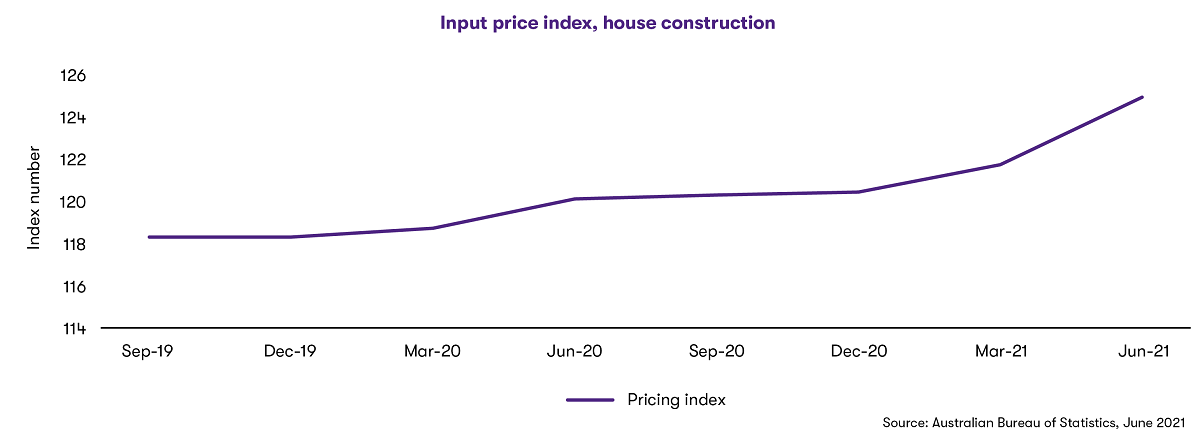
The Australian Bureau of Statistics’ (ABS) June 2021 figures demonstrate the extent of inflation for Australian detached residential build costs, with input costs up by almost 8% since commencement of the pandemic in early 2020. The graph below indicates price stability prior to the pandemic, followed by an accelerating inflationary trend from the start of 2021.
In May 2020 Australia’s largest residential property lender, CBA, predicted a drop in property prices of up to 32% over the coming years, and mass unemployment. This sentiment was generally shared by most economists, notwithstanding the massive economic stimulus packages already being rolled out by governments and the fact that most states were already moving through the first stages of easing of social distancing restrictions.
Less than 12 months later, the ABS reported that private sector house deliveries rose 5.9% to a 20 year high of 35,869 in the March 21 quarter, on the back of a rise of 27.1% in the December quarter.
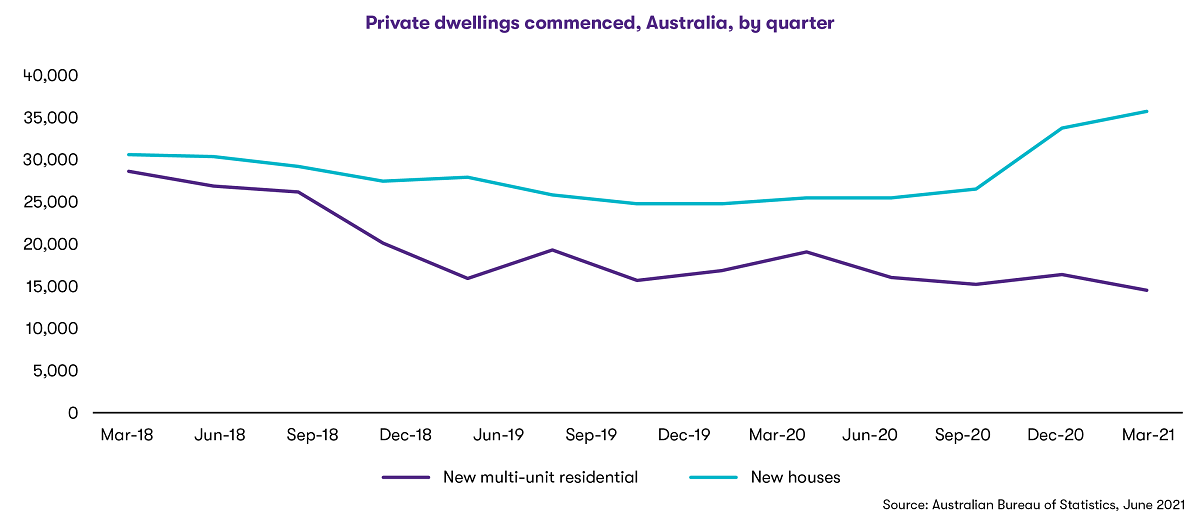
The housing boom appears to be concentrated in detached dwellings, with a record 143,700 detached homes commencing construction across the country, driven by a combination of first home buyers cashing in on Homebuilder, regional relocations of remote working professionals, and a general rush to domestic outdoor living space over the confines of urban unit living. Denser housing options haven’t fared as well, yet the surge in demand for housing is very much a whole of first-world phenomenon, contributing to rapid inflation in global material costs as supply chain limitations combine with surging demand driven by big government stimulus packages in the bigger economies. The Australian Government’s stimulus measures around housing and infrastructure, are dwarfed by the $1 trillion infrastructure package recently passed the United States Senate.
The June 2021 figures from the ABS evidence the rising costs for detached residential builds in Australia, dominated by timber, steel and electrical.
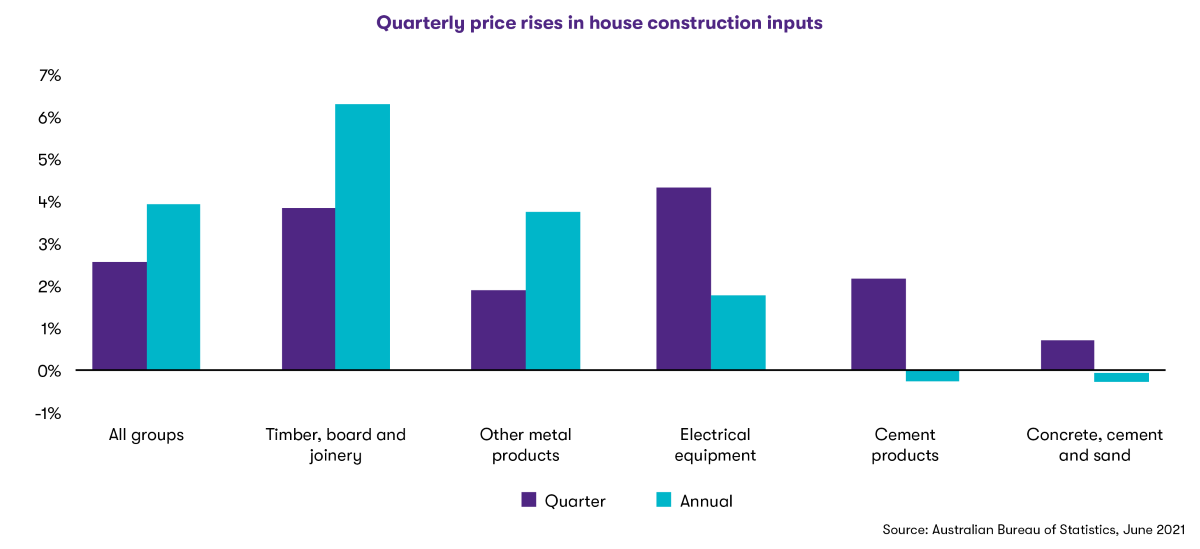
Master Builders Queensland deputy chief executive Paul Bidwell was recently interviewed on the issue and considers timber is “by far and away the biggest issue”, with timber frames, laminated beams and roof trusses in short supply and prices “up 70 per cent since last November and still rising”.
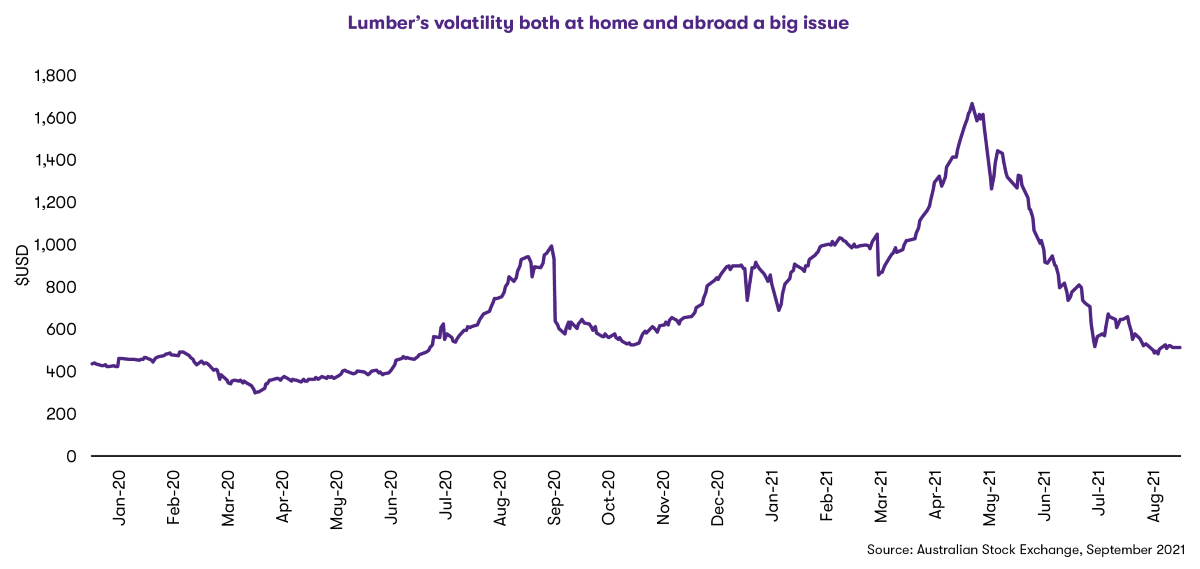
The price of lumber reached historic levels in May this year, peaking at US$1600 per 1000 board feet, a 300 per cent rise on the previous year. While the spike in international lumber prices has unravelled in recent months, it does not necessarily reflect the Australian realities of timber demand which is supplied almost 85% from domestic production. Traditionally, Australia imported about 20% of its house frame timber but this has shrunk due to disruptions to shipping and the spike in construction activity in the more lucrative US and Europe markets.
While local producers are operating at capacity, the limits of domestic production have meant cost increases and higher demand for imported timber. Framing timber is particularly in-demand, increasing 25% in price over 12 months, 9.2% in the June 2021 quarter, and according to analysts, may see a further rise when the September 2021 statistics are released. After that, expectations are that we will price moderation may not occur until the surge of HomeBuilder homes are completed.
While there is much discussion around the merits of substituting steel for timber, it may be challenging for builders to make the switch when already locked into pricing and regulations or approvals needing to keep pace with any changes.
The graph below demonstrates the rapid rise in Chinese steel prices over the last nine months as global economies rebounded from 2020 slumps.
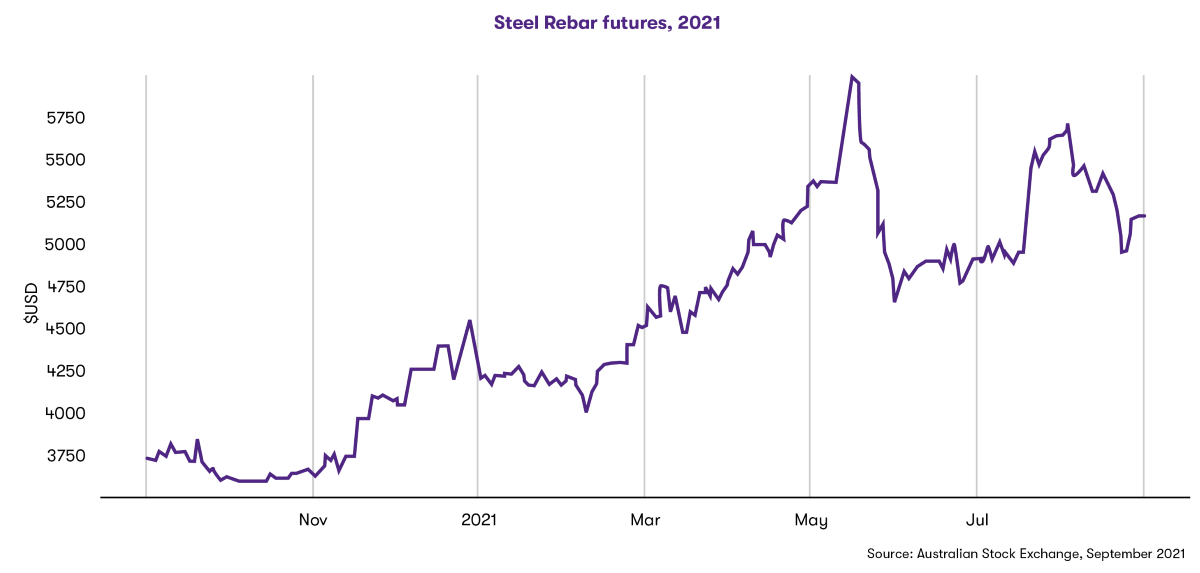
Rebar prices remain 35% higher than 12 months ago and are expected to remain generally elevated supported by continuing government stimulus packages and efforts by the Chinese Government to curb carbon emissions. Not good news for constructions heavily reliant on steel and concrete.
The absence of international immigration for the last 18 months has resulted in significant shortages, particularly for blue collar workers. Following the initial pessimism of the early pandemic, job vacancies, measured by online job postings, have skyrocketed for construction industries in all states, particularly in those states less impacted by lockdowns.
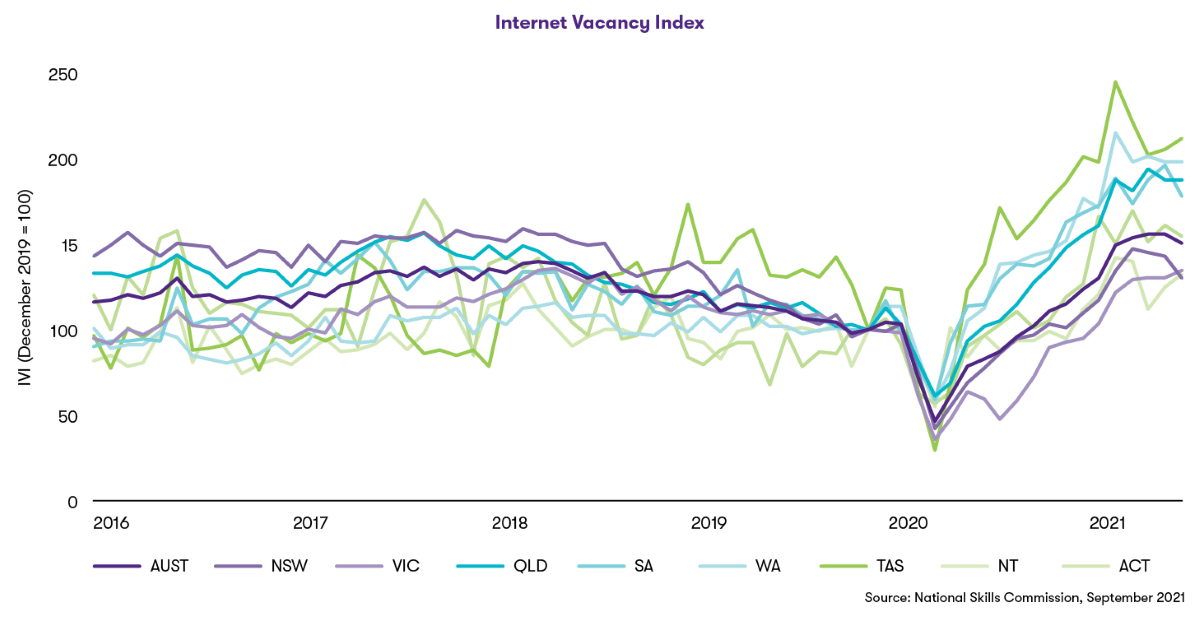
This has resulted in a significant spike in wage costs following the dip in the June quarter of 2020. Anecdotal feedback is that strong market conditions have seen workers comfortable with contract work while hourly and daily rates are high, and salaries for placements this year are up 12% on 2020 and 10% higher than 2019.
This confidence may moderate in some markets as the Delta strain has forced tighter working restrictions than were experienced in 2020. Though builders with a strong pipeline of work are choosing to still pay contractors to ensure they have access to them after government restrictions lift.
The extent of labour and material price inflation experienced by builders varies between operators. Larger operators may be cushioned by purchasing power, forward orders/ hedging instruments and attractive career opportunities. On the other hand, smaller operators may be more exposed due to less material purchasing power, limited human and financial resources to retain employees and their contractors lured to more lucrative projects.
This is reflected in anecdotal feedback from industry professionals which cite cost increases for larger industry players at 10%, whereas the exposure for a smaller residential builder may be closer to 20% rises.
Those builders who tendered aggressively to secure pipeline revenue during CY2020 and early 2021 (prior to the significant inflation manifesting) are most at risk of incurring significant losses having to deliver these projects in the current cycle. Those that entered the pandemic with a strong balance sheet and a pipeline of existing profitable projects should be able to weather the storm in most cases -particularly if JobKeeper subsidies were obtained.
By comparison, marginal operators seduced by the prospects of rapid turnover growth presented by stimulatory programs such as Homebuilder, may soon realise that their financial resources are insufficient to fund either the top-line growth, or the unexpected bottom line losses from projects now subject to the inflationary price hikes.
While the obvious answer to protecting builders from inflation pressures is to avoid lump sum contracts, in the building sector, lump sum contracts are more often than not the norm demanded by principals and financiers.
The impact of material and labour price inflation over the last six months is likely to render many committed project works unprofitable for builders. While the extent of further inflation is unknown, very few analysts and commentators are suggesting a ‘snap back’ to pre-COVID norms is likely within the next 12 months. A strategy of delaying commencement on burdensome projects may exacerbate the problem while also exposing the builder to the risk of future litigation and/or sanctions by regulators.
Accepting that inflation may be sustained is the first step, followed by quantifying the likely financial impact on affected projects and conduct modelling to ascertain when the burden of fulfilling these contractual obligations will be borne and understanding the tipping point. From this analysis, strategies may be deployed to:
The team at Grant Thornton Australia can offer expertise to assist builders, developers, financiers or other key stakeholders navigate distress:
While the price volatility and tightened resources risk presents a major challenge for builders, developers and financiers alike, the exploding lead times and delays of materials contribute to further headaches. It will be vital to map out the potential impact on your projects, so you can act in time and preserve the longer term sustainability of your business.
Watch this webinar on-demand as we host a panel discussion on the ways businesses are responding to supply chain challenges and when supply/demand may return to normal – if at all.


Payday Super may expose hidden cashflow weaknesses. Discover the warning signs, business impacts and restructuring options available.

Explore tax strategies to manage labour, fuel, import and cash flow pressures in construction.



The NSW Budget 2026 focuses on health and education spending, with slower growth forecasts, rising debt and targeted foreign investor duty relief measures.

