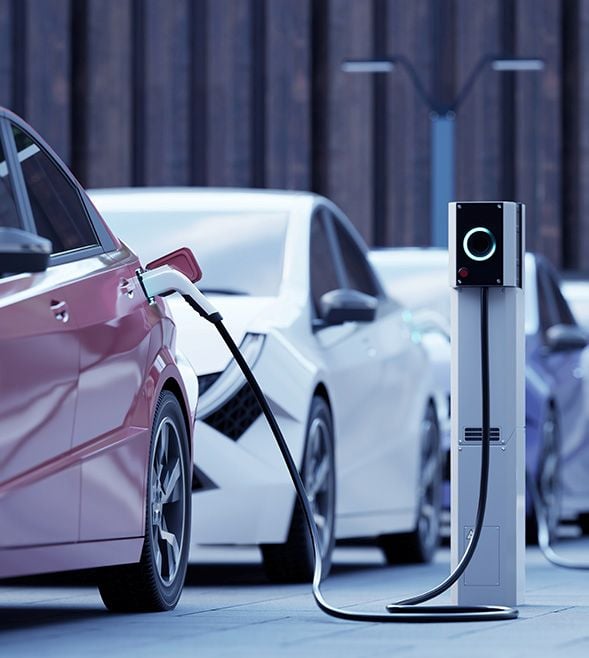
These changes affect two key areas many employers and employees currently rely on – the concessional FBT treatment of Electric Vehicles (EVs), and the ability to salary package laptops, mobile phones and other work‑related expenses. While the measures are intended to scale back the cost to government of these concessions and prevent ‘double dipping’, they are expected to materially reduce employee take‑home pay outcomes and will require employers to reassess their remuneration and packaging arrangements ahead of implementation.
Electric vehicles
The Federal Government has announced changes to be implemented from 1 April 2027, removing the FBT exemption for EVs, staggered across a transitional period. The proposed changes remove the full FBT discount for EVs under the luxury car tax (LCT) threshold, and introduce a 25 per cent discount. The timing of the proposed changes will look like this:
| Threshold |
Now until 31 March 2027 |
1 April 2027 – 31 March 2029 |
1 April 2029 onwards |
|
|
|
|
|
|
|
|
|
|
|
|
|
|
|
The LCT threshold for EVs is currently $91,387 and is indexed each year.
Whilst we don’t have draft legislation for the proposed changes yet, the government’s announcement indicates that existing leases will not be impacted. We therefore expect transitional rules for leased EVs that will link their FBT treatment to the start date of the leases. Presumably, the treatment of owned EVs will change as of the start date of the changes.
The impact on take home pay for an employee salary packaging an EV with full FBT exemption versus a 25 per cent exemption could be significant. For instance, salary packaging a $50,000 EV novated lease could currently save an employee around $6,500 pa, compared to leasing in their own name. Reducing the FBT exemption to 25 per cent could reduce these savings to around $1,500 pa. While this still represents a saving, the car will cost the employee $5,000 more every year in this example.
Salary packaging of laptops, mobiles & other work-related expenses
The government recently released draft legislation to introduce a $1,000 instant tax deduction for work related expenses. Within those proposed changes are a number of important FBT changes that are slated to take effect from 1 April 2027. The proposed changes include:
- ‘Eligible work-related items’ will no longer be tax exempt where they are salary packaged. Eligible work-related items for these purposes include: laptops, mobile phones, other portable electronic devices, computer software, protective clothing, briefcases and tools of trade.
- The limit on only one item of a similar type of eligible work-related item being exempt each FBT year will be removed. This is currently already the case for small businesses, or where the item is to replace a previous one.
- Work-related deductible expenses (e.g. self-education, uniforms, home office expenses) will no longer be 'otherwise deductible' for FBT purposes when salary packaged.
These changes aim to ensure employees cannot claim the $1,000 instant tax deduction as well as salary packaging work related costs, which would be a ‘double dip’. However, the way the proposed legislation is currently drafted effectively prevents salary packaging of such costs in excess of $1,000 (as there would be an FBT impost). This means employees will be left with the only option being to claim these costs in their tax returns.
If you would like to understand how these proposed FBT changes may affect your organisation or employees, please contact your Grant Thornton adviser.
Learn more about how our Fringe benefits tax services can help you