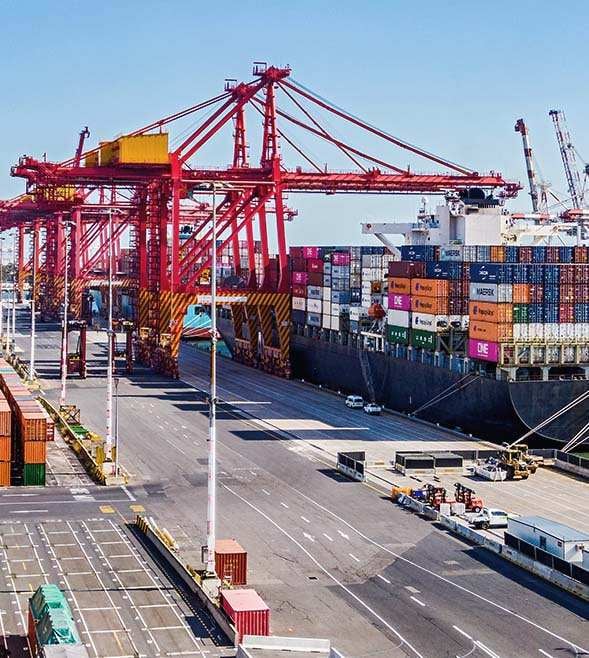
Explore how sustainability reporting can enhance compliance, supply chain resilience, and meet consumer expectations for manufacturing businesses.
Explore the benefits of sustainability reporting, from increased revenue and access to grants, to improved share price and talent retention.
As the regulatory landscape continues to evolve, it's crucial for small businesses in Australia to stay updated on new compliance requirements. One significant area is sustainability reporting due to the Australian government's introduction of mandatory sustainability reporting requirements. While these regulations may not directly apply to small businesses, understanding their implications is essential for maintaining strong commercial relationships and ensuring future compliance.
As of April 9, 2025, a minimum universal tariff of 10 per cent has been applied to all imported goods into the United States, while certain countries face higher reciprocal tariffs based on their US trade deficit.
In the dynamic landscape of family business and current economic environment, it’s critical to prepare the next generation to ensure they’re comfortable to take over operations.
The ATO estimates Australia has 800,000 trusts controlling over $3t in assets and with $3.5t in wealth about to transition from the incumbent generation over the next 20 years, there needs to be consideration for the impending vesting date of Australian family trusts.
Skills gaps in customs and trade threaten the bottom line and restrict future growth. While recruitment strategies are the key to solving this challenge in the long term, customs and trade managers can ensure operational tasks and strategic projects stay on track by bringing in a trusted, external partner to act as an extension of their team.
Family businesses are the backbone of the Australian economy, providing stability and employment. However, as these businesses grow and evolve, so do the complexities of their financial landscapes. For the Rising Generation preparing to take the reins, understanding and managing these complexities is crucial.
Last week, the Australian Securities and Investments Commission (ASIC) released a report highlighting issues with the superannuation industry's handling of death benefit claims and the impact these have on grieving Australians.
Organisations are bringing cost diligence back into the customs and trade planning equation in response to improving supply chain conditions. But finding cost efficiencies should not lead to higher risk, lower quality, slower delivery times, or detract from customer satisfaction. Instead, the focus should be on strategies that are a win for both the customer and your organisation’s bottom line.
Post-acquisition disputes can significantly impact the success of a transaction and the ongoing success of the businesses involved. Read about practical insights into common post-acquisition dispute issues and how to address them proactively, particularly through the financial due diligence and deal advisory process.
The pandemic, the global shipping crisis and the shock of Russia’s invasion of Ukraine drove hard-pressed customs and trade professionals to focus almost entirely on reducing risk and ensuring continuity of supply. But recent evidence of improving supply conditions means that pressures on customs teams are finally beginning to normalise.