Upbeat intro music
Rebecca Archer
Welcome back to Beyond the Numbers with Grant Thornton – a podcast unpacking marketplaces shifts in today’s dynamic business landscape.
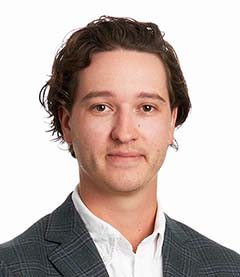
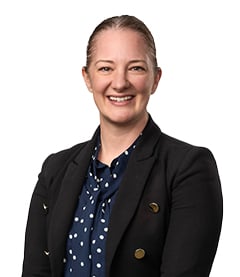
I’m Rebecca Archer, and today I’m joined by Corporate Finance Partner Pete Burgess and Private Enterprise Partner and ESG Strategy Lead Michaela Pogson.
Today, we’re exploring sustainable business models and the metrics that matter to investors. So, how can business owners set themselves up for success – whether they’re wanting to grow or preparing to sell?
Welcome Pete & Michaela!
Michaela Pogson
Thanks, Rebecca.
Pete Burgess
Thanks, Rebecca.
Rebecca Archer
So first off, what are you currently seeing in the M&A landscape in Australia?
Pete Burgess
Yeah, thanks, Rebecca. Happy to jump in there. I think probably the last 3 or 4 months has been a little bit of a roller coaster.
If we think about pre-Christmas year end, we saw a real flurry of transaction volume. That was really, I think, a little bit of bank up of uncertainty in the calendar year 2025 period, sort of crystallising with the new ACCC Mergers & Acquisitions reform, which essentially meant that, you know, a large number of deals were trying to get done by acquirers pre-31 December.
So, we saw, you know, both from a buy side, sell side, and transaction advisory perspective, we saw, you know, a real flurry of transactions looking to complete. I would say, like, typically in a, you know, in a normal world, January is a really quiet period for the corporate finance team and the M&A team. You know, typically everyone goes on leave, and everyone switches off. I'd say that happened, but a much shorter period of time.
So, by second week of January, things were like fully back into it, and, you know, I think, you know, speaking with, you know, a my colleagues and people outside of Grant Thornton, we saw, you know, a pretty significant uptick in new interest, both from investors and also vendors looking to actually pull the trigger and either find a partner, whether that be private equity or trade, or fully realise their value in their business.
So that really kicked off in sort of the January-February period, and that's really carried us through. So, I think, you know, we're seeing some ups and downs during that period of time as well. Like, we've had a pretty significant technology crash or SaaS impact off the back of, you know, incremental and additional like leaps of technology in AI, and there's a pretty significant question mark around, I guess, replaceable AI, and we'll probably get into that a little bit later, but it really has, I think, emphasised the importance of a moat for a business, you know, and really emphasised the importance on, you know, having a defensible like market position.
So yeah, I think that's probably been the last 3 or 4 months of what we're seeing in landscape.
Rebecca Archer
And how does that sort of set up the landscape in the coming months? What are you expecting?
Pete Burgess
Hopefully closing a few deals, Rebecca. So, um, yeah, quite frankly, we've got, you know, some really great transactions that we're working on. Great businesses, great founders, really high growth prospects, and actually delivering on that growth.
There's significant investor interest. So, we've been waiting maybe for the private equity groups. We know that there's a lot of dry powder out there. We know that they've got a mandate to go and invest, and we're actually seeing that come to fruition the first half of this year.
So, I think from our perspective, you know, we've already had a couple of deals close out this calendar year, and we'd like to see quite a few more.
I think what that means probably for like going forward, I think there's going to be some industries that are impacted by what's happening in Iran, particularly when they're, you know, impacted from a supply chain perspective.
It’ll be a little bit of watch and see, but I think, I think if we've learned anything over the last sort of 24, 36 months, you can jump at shadows and everything short-term feels very urgent and very risky, but then when you look back over that 6-month period, you realise it all smooths out.
So yeah, I think, you know, from our perspective, keen to see a number of these deals complete and move on to the next ones.
Rebecca Archer
Are you able to speak to exactly what having a sustainable business model means in this current landscape?
Pete Burgess
Look, it means different things for different people, and, and quite frankly, different things for different investors.
I think, Rebecca, probably last time we spoke, you know, I sort of touched on 3 different ways that people invest. It's either you're investing like for purpose or for impact, or you're investing for returns, and then there's the combination of, you know, trying to do both together. I would say like the vast majority of private equity transactions are trying to do both together.
You know, they have their own investors that are mandating certain ESG or sustainability factors into their investments. But when we take a step back, I think we can all get caught up in like ESG metrics, you know, rhetoric, but the reality is, is I think – and sort of back to your original question – is like, what does a sustainable business model mean?
Sustainable business model means quality and predictability of earnings. It means, you know, a defendable market position. It means they've got scalable growth levers, and they've got the ability to actually continue to create value.
So, you haven't got a business that's going to stagnate and go backwards. You've actually got a business that's going to grow. And quite frankly, I think like a lot of that comes back to the people who are leading it, you know, their vision and, you know, their ability to turn vision into reality.
When you take a lens of an investor looking at a business, you know, more often than not they're judging the founder or the person they're going to be backing first and foremost. Then they're running an industry screen; then they're running their financial metrics screen, and then finally there would be other sort of ancillary metrics that they're running on the background.
But, you know, fundamentally they need to look for a good business in a good niche delivering good results that has the ability to endure over time.
Rebecca Archer
And of course, in reality, I would imagine that many businesses are at different points in their journey. So, what about those businesses who might need some help here, Michaela?
Michaela Pogson
Yeah, thanks, Rebecca, and really resonate what Pete said as well, that for us, the way that we work with our clients is really about building sustainability within the overall business strategy rather than it being one versus the other.
The businesses that do both of them together are the ones that really get the best results from a growth point of view, but also operationally as well. So, businesses that feel like they're just starting, often what we see is they're – they've actually done a lot more than they expect that they have. They might have just not put it under that sustainability banner.
So, it's really working with them around, okay, what are they already doing and how do we maybe put some metrics around what they're doing to help them support what they're trying to achieve, and also give a bit more granular detail around how they might change some of the decisions that they're making.
So, our starting point is looking at that carbon emissions data because it's a much more standardised process for a lot of businesses out there, and it does help with that untapped information for businesses. So, looking at supply chains and where they might get they're most bang for their buck in terms of sustainability metrics within their business strategy.
And it also really helps uncover some of the things that clients are doing that they may not have told us that they're doing. So, for example, one of the clients that I'm working with at the moment told me that they're reporting this information to some of their customers already, but they're using their head office information, which is their head office is a manufacturer and they're just the distributor.
So, if they pivot and actually look at their own data, that'll change the ballgame in terms of what they're reporting to their customers and how they might be able to advance some of the things that they're doing with those customers because they really got much more advantage than, say, a manufacturer does.
And then I guess if they look at the other side of this, some of the biggest margin leaks in businesses actually sit outside of the P&L. So, with a tax and finance background, a lot of what we look at is the balance sheets and P&Ls, but this data has the opportunity to kind of look at some of those other things like energy use, waste, downtime, inefficient processes, how many businesses talk about their processes being inefficient, and these metrics can kind of help put some identifiers around where those processes are more inefficient, and having that really helps them not have those same conversations over and over again, but actually put new strategies around solving those problems in their business.
Rebecca Archer
Can you talk to us a bit more about uncovering margin and efficiency gains within a business? If we sort of dig down a little bit deeper there, where does a business start?
Michaela Pogson
Yeah, I mean, it's all really dependent on the specific business and what the business does, obviously, but uncovering those margin and efficiency gains, really improving sustainability often reduces those costs.
Looking at where can they reduce energy usage, what are the efficiencies in their operations that they can find, and also helps win new customers because they're also ticking off those issues for their customers, not just for themselves. So, it's really a tick, tick, tick of best practice in business.
Look, the financial numbers might say that businesses are profitable, but then sustainability metrics might show that they're paying, for example, an invisible waste tax, you might say.
What do I mean by that? Well, if you're a manufacturing business, for example, and every time you make one of your products, you produce X amount of waste, but you could have used that waste to create another product that you could have sold rather than spending money on disposing the waste, then obviously that's going to be more beneficial for your business than spending money on, on both sides.
So, looking at where your particular business might have those opportunities.
Rebecca Archer
Is this something that they can incorporate into month-end reporting, maybe just as an extra step? Is that a practical way to introduce that?
Michaela Pogson
We really try and embed the sustainability data into our clients' management reporting so that they're looking at the financial and non-financial metrics together, and for me, being able to put numbers on the non-financial information, I don't know, that really excites me, but that's probably because I'm a numbers person.
So, the more that we can embed those two together within their management reporting, a lot of people are receptive to seeing numbers. So how can you reduce numbers? How can you get more out of that information?
So definitely trying to embed that on a regular basis so that they can make better decisions from an overall business strategy perspective, not just sustainability or financial. Like, it should all be integrated.
Rebecca Archer
So how can businesses connect ESG and sustainability metrics to value drivers – cost, revenue growth, risk reduction, talent retention? What are the sort of practical ways that they can capitalise on that?
Pete Burgess
I would say, like, that the financial metrics are actually, like, symptomatic of all the things that have happened prior or leading up to you know, the financials actually crystallising.
So, you know, when we look at a business, right, if we're looking at a potential client, we will look at a number of different things to tell whether they're high performing or not, depending on their industry, right?
So if a business is high performing, then the chances are that they're actually doing quite a few things that are sustainable in nature, in that they're, you know, reducing waste, or they've got a great supply chain, an efficient supply chain, they've got great contracts, you know, they're enduring in nature because of their metrics.
So, you know, things to look out for, you know, revenue growth is obviously a critical one. You know, have they got long and sustained revenue growth? They're not just there, they're not going backwards, they're not stabilising. They've got the ability to continue to penetrate the market.
But again, like gross margin stability, like EBITDA margin stability – all of these things, you know, indicate whether, you know, for example, in gross margin, you know, do they have the ability to absorb costs.
So, when we're talking about Iran, like for example, if there's an inflation in their Cost of Goods Sold, do they have the ability to absorb that, endure, wait out their competitors failing so they can then take further market share?
Same with an EBITDA margin perspective. This is where sort of Michaela's touching on, you know, there's a lot of costs that are either falling down into EBITDA or, for good businesses, are not actually showing up in EBITDA because they've got the efficiencies built in already.
So, for me – there's two different things, right? Sustainability is one thing, a sustainable business model is a very different thing. And I think that's where we need to focus. For me personally, the focus is on creating sustainable business models.
Sustainability doesn't really mean anything unless you've got an enduring business. So, if you can create a sustainable business model, focus on the things that actually matter, that ensure that you're going to be ahead of the curve, resilient, and enduring, then you actually have an ability to have a positive impact beyond that.
So, I would say like those metrics, like ESG and sustainability metrics, are actually already incorporated into the way that we think about value and have been for 100 years.
You know, if you go and talk to any investor, when they talk about the way that they value a business, it's really just looking at your supply chain, it's looking at your people, it's looking at retention.
All of those sort of quantitative and qualitative factors really just get reshaped into 3 different banners, being E, S, and G.
Michaela Pogson
I think in some ways – you're right – you can think of it however you want, but it's really down to how do you do business better, how do you make a better sustainable business model. But ultimately, it's about thinking about more than just the numbers. It's like, what do those numbers mean and what has impacted you to get to that point, and how are you going to keep growing and keep ensuring that your business is relevant in the market?
Rebecca Archer
I would imagine that for a lot of businesses, they are just words or high concepts, but it's great to be able to talk about this and put some real meat on the bones so that businesses understand exactly, you know, they're not just these lofty titles. They're probably things that with a couple of little tweaks within your own processes can bring about huge change and huge benefits for you.
Michaela Pogson
And it's just about putting structure to that. Often businesses do think about these things, but some of it creates a bit more structure around, okay, how are we going to determine where the risks in our supply chain are, how are we going to determine where our inefficiencies are and look at that in a way that might help resonate with people that are making decisions in the business.
Rebecca Archer
So, I'm curious about what kinds of sustainability metrics investors are really interested in. What do you hear? What, what sort of, if we break down the E, the S, the G, what are the priorities there for investors?
Pete Burgess
Yeah, good question. I think the vast majority of investors, you need to have a great business to start with before ESG factors even make sense to look at. At the end of the day, you know, no one's investing in a business on hopes and dreams. They're actually investing to get a return.
So, I think the first screen really is everything we've talked about, like, you know, quality and predictability of earnings, defensible market position, scalable growth levers, a strong management team. They're the critical things that they look at in order to get to that position to be assessing it.
You know, perhaps they're looking at, okay, what industry are they in, what are they doing? Um, and, and really this comes down to, again, the type of investor.
Are you a traditional mid-market private equity investor that doesn't have an ESG mandate, or are you a mid-market investor or a specialist investor that does have an ESG mandate?
So, the screen is very, very different for both of them, but fundamentally they're looking for businesses that look and feel the same. They're probably just playing in different sectors.
So, from my perspective, it really does depend on who's looking at it. And, you know, I think a big part of our job is helping position a business for different types of investors. So, if we're taking, you know, a manufacturing business to two separate investors, one being an ESG-focused investor and one being a big market-focused investor, we're probably focusing in the initial conversations, the initial sort of exploration on slightly different things. Maybe the traditional one, we're really, you know, ramming home, you know, market comparables against, you know, revenue growth, EBITDA margin, gross margins, etc., handing out the fact of their, you know, secure contracts and etc., etc.
So that's more sustainable business model, whereas the other end is like sustainability. So, you might be more focusing on their ability to, from a waste reduction perspective, what they're actually doing in the broader ecosystem. So, you know, we've worked on, you know, a range of different sustainable packaging transactions in sort of 3 or 4 years.
So, the focus there is like there's a big regulatory push to reduce single-use plastic. So, we're seeing investors, you know, really jump into that space. So, we've worked on a number of different transactions in that space, but again, that's sort of, you know, tailwinds pushed rather than anything else.
So yeah, I think at the end of the day, it does come down to the type of investor. There are probably 1,000 different metrics they look at from an ESG perspective. It's just whether they talk about it in an ESG context or they're talking about it as part of their, you know, their broader diligence process.
Rebecca Archer
So, I wonder if each of you could perhaps end on one key takeaway for businesses, whether it be from a growth perspective or perhaps preparing to sell?
Pete Burgess
Rebecca, from my perspective, the key takeaway is like not only know your business, know your buyers, know your investors, and know your competitors.
If you think you've got a great business, do the work to make sure that you're comparing not only top line numbers but your margins, your EBITDA margins.
Understand what the comparables are, you know, what good looks like, and then back solve for that to understand, okay, if we're actually below on a gross margin perspective, below on an EBITDA margin perspective, what are the things that we should be doing in our supply chain, in our manufacturing, with our people to get the most efficiency out of our business, to create a high-performing business, to ensure that when we do go to do something, whether that be acquire something, sell something, or, you know, try and win that enterprise client, we're best positioned to do that.
So, I think it's take a step back out of your own business and look at the broader ecosystem.
Michaela Pogson
Yeah, and I think all I would really add there is just the power of understanding your non-financial drivers just as well as your financial drivers will better position you to adapt, whether it's for growing, transacting, whatever it is in your business. It really helps you make better decisions rather than scrambling for answers. So that's where the real value is here.
Rebecca Archer
Well, Pete and Michaela, thank you so much for making the time to come on today's episode. Once again, for those listening who wish to connect and delve deeper into your work, or perhaps explore potential ways that you can even assist them, what's the best way for them to reach out and get in touch?
Pete Burgess
Thanks, Rebecca. I think probably LinkedIn's the best for me, but I think the website's also got my mobile number. So yeah, feel free to reach out.
Michaela Pogson
Same for me.
Rebecca Archer
If you enjoyed this episode, make sure to follow Grant Thornton Australia on Apple Podcasts or Spotify so you never miss new insights. Do you have a burning question or a challenge keeping you up at night? Drop us an email. We’d love to hear from you. Our experts are here to break down the business, tax, advisory and consulting landscape, so you can focus on building your business. Thanks for listening.
Upbeat outro music