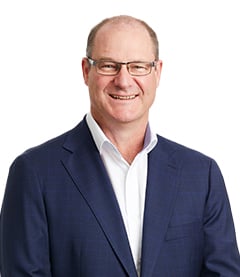
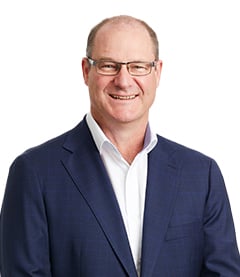
Partner – Consulting
Risk Consulting
Martin has held wide-ranging roles in financial crime risk management in Australia and Europe over the last 20 plus years, including as AML/CTF Compliance Officer at two of Australia’s leading financial services organisations, and Divisional Money Laundering Reporting Officer at two of Australia’s largest banks.
His work includes leading and implementing enterprise-wide ML/TF risk assessments, and responding to AML/CTF Independent Reviews conducted in accordance with the Australian AML/CTF regime.
Martin has also led the design and integration of financial crime teams during the merger of two Australian financial services, and participated in designing the financial crime target operating model for one of Australia’s largest banks.
He has a demonstrable history of partnering with business functions and business executives to ensure risk and control environments are understood and appropriate for the business, as well as aligned to the financial crime risks faced.
Martin has been providing specialist AML/CTF consultancy services since 2022 and has supported businesses in responding to formal AUSTRAC investigations as well as undertaking reviews to confirm the completion of AML/CTF remediation activity.
Experience
- ML/TF risk assessments: supporting businesses to plan and conduct a comprehensive risk assessment to determine risk management measures required.
- AML/CTF compliance policies and frameworks: assisting clients with the design of tailored AML/CTF Programs based on ML/TF risks identified from a risk assessment, and the systems and controls to identify, mitigate and manage those risks.
- AML/CTF independent review: providing a comprehensive independent review to close any potential compliance gaps and develop a plan to sustain or improve the control environment.
- Specialist transaction monitoring advice: helping clients design and implement transaction monitoring programs to monitor for unusual transactions and behaviours of customers.
- AML/CTF advisory services: providing bespoke advisory services to clients on complex areas of AML/CTF compliance, as well as tailored advice to support regulator engagement.
Qualifications
- Bachelor of Justice & Society
- Certified Anti-Money Laundering Specialist (ACAMS)
- Certified Sanction Compliance Specialist (ACAMS)
- Strategic Leadership Programme, Mount Eliza Executive Education
- Scaled Agile Framework SAFe® Agilist (SA)