The fuel tax credit (FTC) landscape continues to evolve, driven by increased ATO scrutiny, regular rate changes and recent Government intervention in response to volatile fuel prices.
For many businesses, particularly those operating heavy vehicles or undertaking fuel intensive activities, these developments have increased the complexity of calculating and reporting FTC claims.
What is changing?
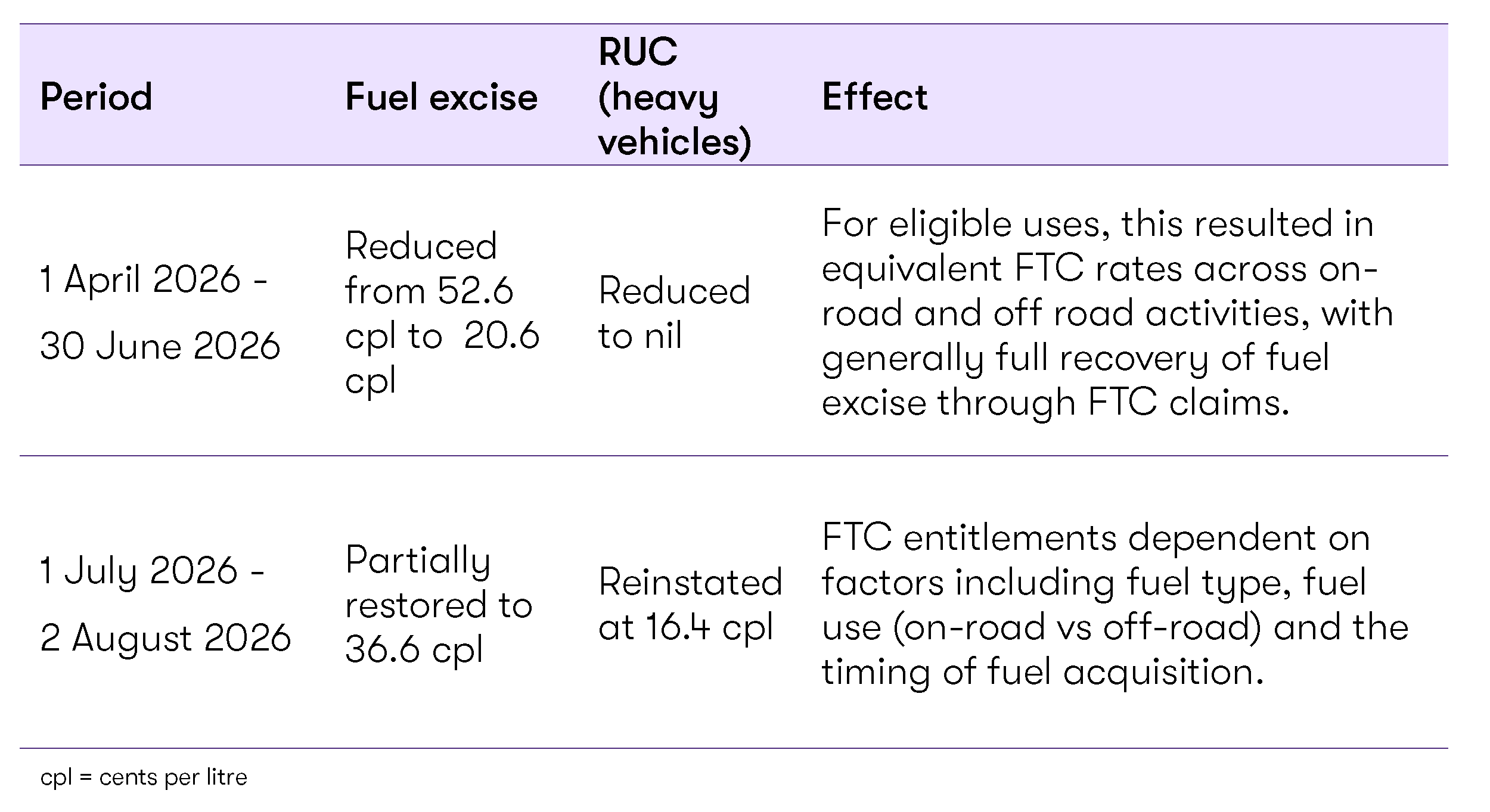
As part of the Government's response to fuel price volatility, temporary changes were made to fuel excise and the road user charge (RUC).
![]()
We discuss the 1 April 2026 changes and their implications for businesses in more detail in our previous article.
Why does this matter?
With the ATO continuing to scrutinise both historic FTC claims and current calculation methodologies, these changes have created practical challenges for businesses claiming FTCs, in particular:
- Multiple FTC rates may apply within a single BAS period.
- Different outcomes may arise depending on when fuel is acquired and used.
- Systems and processes may need updating to reflect changing entitlement rates.
- The risk of errors, underclaims and overclaims increases where methodologies are not regularly reviewed.
Businesses should consider:
- Reviewing existing FTC methodologies to ensure they remain accurate and fit for purpose.
- Confirming systems are capable of managing multiple FTC rates within a reporting period.
- Validating data inputs, fuel use categories and entitlement calculations.
Ensuring documentation is maintained to support FTC positions in the event of ATO review activity.
How can we help?
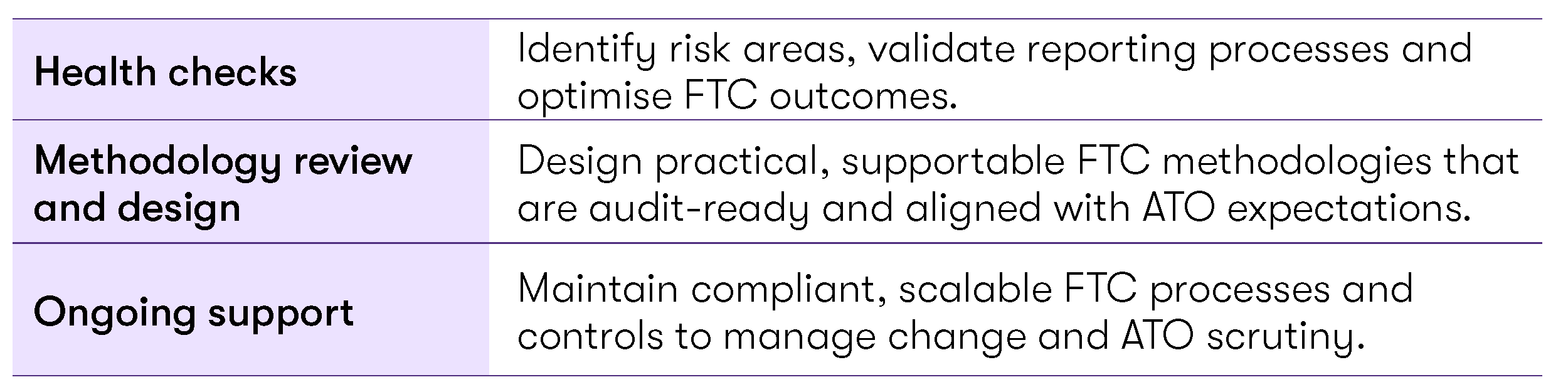
Given the pace of legislative change and increased ATO scrutiny, now is an appropriate time for businesses to revisit their FTC position.
Whether reviewing an existing methodology, assessing emerging risks or strengthening compliance processes, our Specialist Tax team provides practical support to help businesses maintain a robust and defensible FTC position.
![]()
Article contributed to by Christopher Lillis - Senior Manager, Indirect Tax