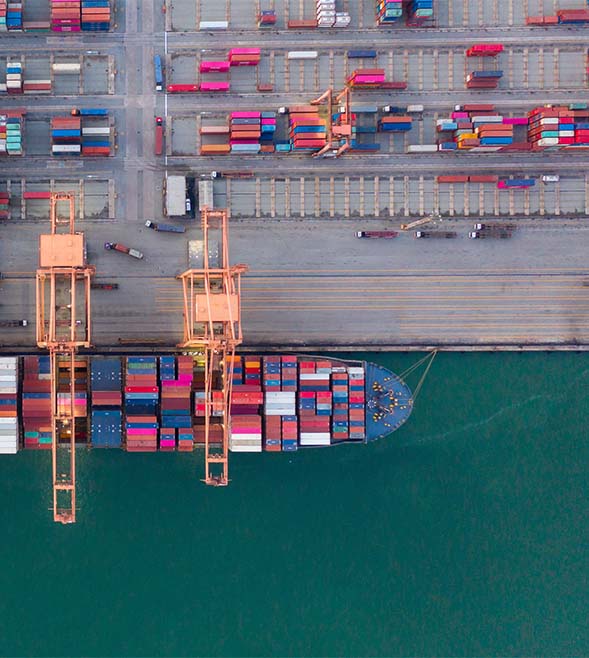
Australia’s exposure is indirect but significant. Although only around 15 per cent of crude oil is sourced directly from the Middle East, close to 30 per cent of refined fuel arrives via Asian refineries that depend on Middle Eastern supply. With tanker traffic through Hormuz down approximately 70 per cent and oil prices above US$100 per barrel, the consequences are already feeding through the supply chain.
Freight rates from Asia have surged as carriers reprice risk and reroute vessels, adding weeks to delivery times. For Australian importers, this means higher landed costs, compressed inventory buffers and growing pressure on production and logistics schedules.
Businesses that source components, raw materials or finished goods through Asian supply chains are facing simultaneous cost increases and extended lead times, a combination that is difficult to absorb quickly.
The disruption also amplifies existing vulnerabilities: limited domestic stockpiles, long replenishment cycles and limited real-time visibility over where goods are in transit and who bears the associated cost and risk.
Key policy shift: why Incoterms and indirect tax now matter more
Events like this highlight that Incoterms and indirect taxes directly affect cost control, cash flow and risk allocation.
Many businesses continue to rely on Delivered Duty Paid (DDP) terms, allowing overseas suppliers to manage customs clearance, duties and import GST as part of the delivery process. While administratively convenient, this approach limits transparency.
Duty savings from free trade agreements are often retained by the supplier, and the Australian buyer may have limited visibility over how the import has been declared and what is driving the total landed cost, including how import GST has been accounted for at the border.
Increasingly, businesses are shifting to tax-transparent terms such as Free on Board (FOB). By acting as importer of record, Australian buyers regain control over customs declarations, can improve visibility over import GST outcomes (including supporting any entitlement to recover import GST incurred), and can ensure tariff concessions are properly applied. In periods of disruption, this visibility allows businesses to understand the real cost impact of rerouting, delays or surcharges and respond more quickly.
Trade, supply chain and compliance implications
A chokepoint disruption has immediate commercial consequences. Higher fuel prices in Asia flow through to freight rates and landed costs for Australian importers, while shipping delays can disrupt inventory and production schedules.
For businesses using DDP terms, uncertainty can quickly arise. If goods are delayed, rerouted or held, it is often unclear who bears additional costs such as storage, demurrage or unexpected duties.
There is also a compliance risk if suppliers misuse the buyer’s ABN or incorrectly declare import values. Where import entries and commercial arrangements are not aligned, this can create uncertainty over who is responsible for import GST and whether the supporting records are sufficient to substantiate GST recovery.
In more complex cases, import GST may be paid at the border but become difficult to recover if no party can clearly support entitlement to recover the import GST incurred.
Accurate and accessible documentation is therefore critical. Tariff classifications, origin evidence and valuation records must be robust so duty concessions are not lost and regulatory scrutiny can be managed efficiently.
Key questions for Australian businesses:
Events like this raise practical questions many organisations have not revisited for years:
- Do our contracts clearly allocate responsibility for duties, GST and other import charges?
- Are we comfortable we are capturing all available input tax credits (GST credits) and tariff concessions?
- If shipments are delayed or redirected, do our agreements clearly allocate the resulting costs and risks?
- Do we know who is shown as the importer on customs entries across our major lanes, and does this match our contracting, logistics and finance records?
In many cases, the first impact of a geopolitical shock is felt through higher costs and operational disruption rather than new regulation. Strengthening contractual and compliance foundations now reduces the risk of adverse outcomes later.
What this means in practice for Australian businesses
For many organisations, these risks are not theoretical. They manifest in small but compounding ways, such as higher freight surcharges, longer lead times, unexpected customs queries or cash flow pressure from embedded taxes that cannot be readily unwound.
Individually, these issues may appear manageable. Taken together, they can materially erode margins and reduce flexibility at exactly the moment businesses need it most. This can be amplified where import GST is paid upfront, but the supporting records are incomplete or inconsistent, creating timing and cash flow drag even where GST should be recoverable in principle.
Importantly, these challenges often sit across functions. Commercial teams negotiate contracts, supply chain teams manage logistics, and tax teams deal with customs and GST, often in isolation from one another. During periods of disruption, that fragmentation becomes a weakness. Decisions made for speed or convenience can unintentionally transfer cost, risk or compliance exposure back to the Australian business.
It is critical to remain agile during uncertain times
Businesses that perform better in volatile conditions tend to have clearer ownership of import decisions, stronger documentation discipline and a shared understanding of who controls pricing, declarations and risk at each point in the supply chain.
This does not require a full redesign of sourcing strategies, but it does require deliberate choices about Incoterms, importer status and governance, rather than relying on legacy arrangements. This includes ensuring the intended importer role is reflected consistently in practice and supported by documentation, so GST outcomes are not left to assumption.
Looking ahead
Australia’s fuel reserves remain critically below the International Energy Agency’s 90-day benchmark, and the country is now managing an active national crisis, not a prospective risk. The government has released up to 20 per cent of emergency stockpiles (approximately 762 million litres) as part of the IEA’s largest-ever coordinated release of 400 million barrels globally. Fuel quality standards have been temporarily lowered for 60 days, adding roughly 100 million litres per month to domestic supply.
Regional shortages are already occurring, and experts warn if the Hormuz blockade continues beyond 30 days, formal rationing powers under the Liquid Fuel Emergency Act 1984 may be triggered.
At the same time, trade concessions, duty deferral schemes and established sourcing patterns assume relative stability. Recent global events show this stability cannot be taken for granted.
Businesses that proactively revisit supply terms, strengthen customs and tax governance, and plan for volatility will be better positioned to manage disruption when it occurs.
As part of that governance, clarifying importer roles and strengthening the documentation trail can reduce GST uncertainty and protect cash flow during periods of disruption.
We’re here to help
Treating supply chain design, tax and compliance as strategic levers rather than operational afterthoughts is increasingly a source of competitive advantage.
Please reach out to our team of experts to discuss how your business might need assistance in adapting to political uncertainty.
Article contributed to by Max Dalsanto – Global Trade & Customs
Learn more about how our Global trade and customs services can help you