The Australian Federal Budget for 2026-27 will be handed down in May 2026, the first budget since Labor's re-election in 2025.
Filter insights by:
Popular topics
Featured insights
Artificial intelligence is accelerating and amplifying traditional business risks, from cyber threats to fraud and decision-making integrity. This article outlines five emerging risk patterns and highlights why organisations must rethink risk management approaches to remain effective in an AI-driven environment.
On 10 June 2026 the High Court found that a trust’s unpaid present entitlement (UPE) to a company is not treated as a ‘loan’, and potentially subject to tax as a deemed dividend under Division 7A.
Latest insights
Many commentators described the Royal Commission into Aged Care Quality and Safety as a once in a lifetime opportunity to reshape the industry to meet the needs of older Australians now and into the future.
It's estimated that around 30% of cross border trade is conducted via companies who are accredited in the Australian Trusted Trader program. The Government intends to increase this to 75% by 2025. Learn more the benefits of accreditation.
As the end of financial year approaches, companies with Employee Share Schemes (ESS) are required to report to the ATO and provide employees with a statement if a “taxing point” has occurred during the tax year.
The Export Market Development Grant (EMDG) program this year is different to any other year. With both the existing scheme and the new reform model in operation at the same time, applicants will have to submit two applications for EMDG if they want to access both programs over the next 3 months.
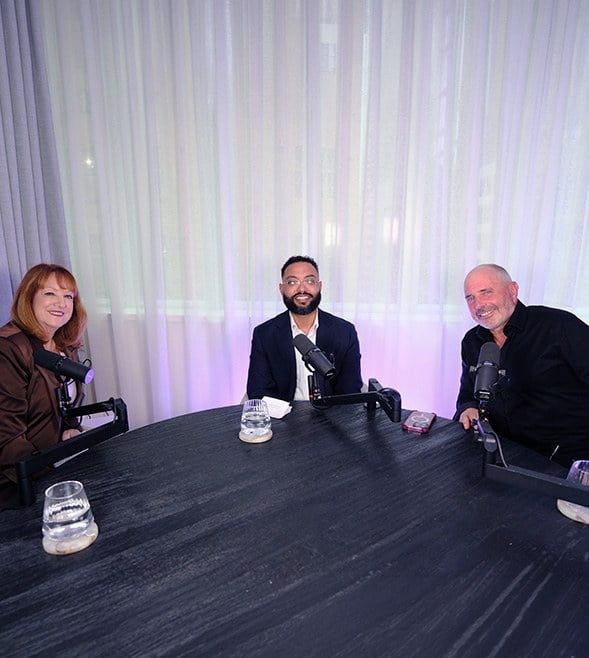
In this podcast, we’re joined by Phil Coorey, Political Editor at the Australian Financial Review, and Vince Tropiano, Corporate Tax Partner in our Sydney office to talk about last week’s Federal Budget.
The 2021-22 Budget made a lot of spending announcements, including a number of tax cuts and incentives, and changes to superannuation. From our perspective here are the four key announcements that will have the most fundamental impact on your business.
From 1 July 2022, digital games developers will be able to access a 30% refundable tax offset on qualifying expenditure. While details are still thin, Sukvinder Heyer shares what we know about this game changing announcement so far.
The 2021-2022 Federal Budget reveals a digital pathway forward for Australia’s future economy. Businesses, manufacturing, governance and government is all underpinned by technology. The Digital Economy Strategy lays out what’s next.
The 2021-2022 Federal Budget highlights new opportunities for the life sciences sector in Australia. Already a great place or research and development, it’s time we ramp up domestic commercialisation and manufacturing to better support and tap into international markets.
Doubling the value of food & beverage manufacturing in Australia by 2030 is absolutely achievable. We have a number of advantages that make this possible.
Every country wants to export – it’s part and parcel of developing prosperity. And it’s part and parcel of Australia’s economy. To be successful, we need to have a diverse range of trade partnerships and to focus on value-adding manufacturing and retaining IP here in Australia.
Energy is critical to achieve our vision for modern manufacturing and a future digital economy. Both will be energy intensive. At the same time, Australia aims to achieve net zero emissions by 2050. We are reaching a critical point where a solution to affordable, sustainable and clean energy generation must be found or all the best laid plans will come to nought. What’s in the Federal Budget 2021-22 for the sector?