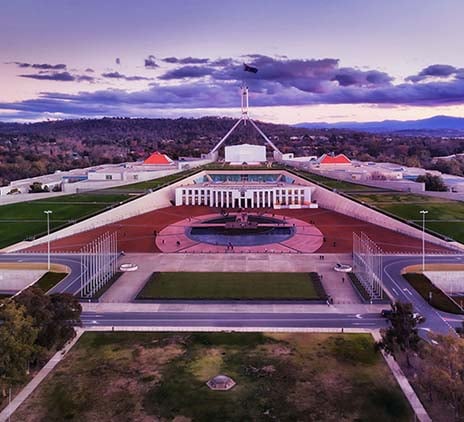
The second Federal Budget of the year has been delivered, and this time it’s a Budget that will be rolled out for the rest of FY22-23. Since the previous Government delivered a Budget in March, the economy has shifted at an alarming rate with the cash rate rise from 0.1 per cent in March to 2.6 per cent now, and on its way to 3.1 per cent by the end of the year.
Filter insights by:
Showing 12 of 51 content results
Federal budget 2022-23 tax implications for business and individuals.
The OECD has been gathering momentum towards addressing perceived tax avoidance amongst multinational enterprises (MNEs), ensuring a fairer distribution of tax for all taxpayers. The Government’s proposed multinational tax integrity to rewrite certain tax laws as they apply to MNEs is consistent with that shift. They were first announced with the intent of addressing the “loopholes” available to MNEs in the Australian taxation system.
Yesterday the Australian Capital Territory’s (ACT) Chief Minister Andrew Barr handed down the ACT budget.
The New South Wales State Government has been busy with tax reform this year – from the raft of state taxation amendments commencing in May, to the first steps to abolish stamp duty introduced as part of their state budget last week.
At a high level, the Property Tax is intended to replace stamp duty as the method of taxing land in NSW. Stamp duty is a large tax paid upfront once on the purchase of land in NSW, while the proposed Property Tax is a much smaller annual tax, similar to council rates.
In October 2021, over 135 jurisdictions (including Australia) joined a ground-breaking plan to update key elements of the international tax system. The Global Anti-Base Erosion Rules (GloBE) are intended to ensure large multinational enterprises pay a minimum level of tax on the income arising in each of the jurisdictions where they operate. The OECD released the Pillar Two Model Rules on 20 December 2021, and Commentary to accompany the Rules on 14 March 2022. Further guidance is expected by way of an Implementation Framework, but that may not be completed and available until the end of 2022.
The Australian Labor Party (Labor) today announced that, if elected, it will seek to introduce measures to "close tax loopholes exploited by multinational companies".
In response to soaring COVID case numbers and the ramifications of self-imposed lockdowns during the last few months, the NSW State Government has announced relief is now available in a $1 billion COVID rescue package.
The Mid-Year Fiscal and Economic Outlook (MYEFO) announcements handed down today included the creation of 1 million new jobs and an expected wages increase of about 11.24 per cent, while inflation is tipped to grow by 10.25 per cent between now and 2024-25. These developments reflect a positive business growth outlook linked to increased business investment and the economy getting back on track following a disruptive year.
NSW continues to heavily invest in its Economic Recovery Strategy in an effort to boost the economy.