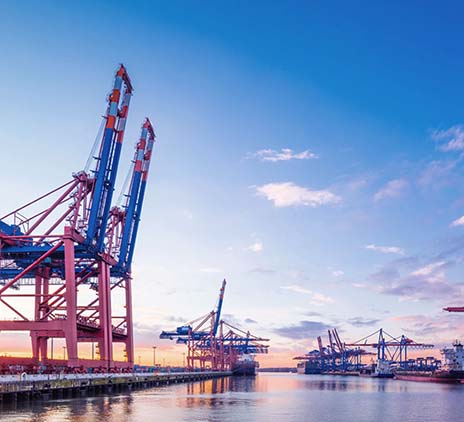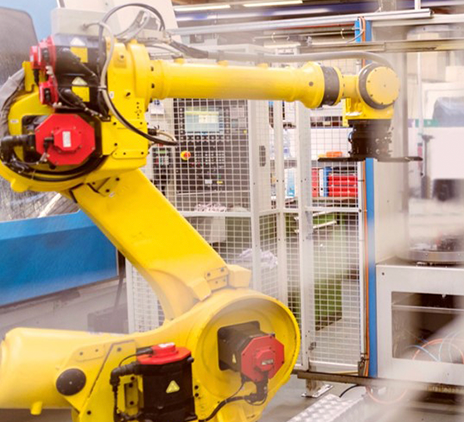
While manufacturing has shown resilience and agility to pivot in the face of the pandemic, the pathway to the solidly Australia-based manufacturing capability the Albanese Government’s seeks, where we are able to “build what we need” and “rebuild our proud manufacturing industry”, is still somewhat unclear.
Filter insights by:
Showing 12 of 46 content results
Australia needs a strong innovation and R&D led agenda to grow our current economic standing and develop new competitive industries to drive productivity into the future. With the Government due to hand down the 2022-2023 Federal Budget on 25 October, our experts have provided their insights about what innovation measures we can expect to see from the new Government.
Australia has relied heavily on businesses and consumers to lead the way on emissions reduction to tackle climate change. Several Australian states have had to develop their own policies and roadmaps to progress the clean energy transition and enable private sector investment outside the national framework. This presents risks and challenges if not managed carefully.
Australian manufacturers have been through difficult times, particularly with the shutdown of the automotive industry, but remaining businesses are proving to be agile and resilient having already battled through lots of challenges. In addition, the accelerating pace of new technologies being introduced, combined with COVID-19 disruption and the Government’s substantial industry support, many manufacturing business models have been fundamentally challenged for the better.
With rising supply chain costs and disruptions on a global scale as a result of the pandemic, Australia has been a prime example of resilience by increasing reliance on domestic products to minimise shortages. Although we’ve increased the supply of Australian products, some organisations struggle to compete with global sellers. As supply chains slowly ease back into a pre-pandemic rhythm and import capabilities open back up to their full potential, to compete on a global scale more efficiently, this creates an opportunity to consider where trade policies via tariffs and quotas could be applied to even out the playing field.
Once Travis Williams, owner and CEO of Box+Dice, decided he was interested in selling the business, he wanted to ensure he received a premium price for his years of hard work, whilst also ensuring Box+Dice and its people would continue to be supported in the future.
Guidelines for the MMI Manufacturing Collaboration Stream have just been released.
Our client was a subsidiary of a US-listed entity, which was then acquired by a Japanese company (Parent company).
A reputable Japanese company (Parent company) acquired an Australian entity operation prior to the outbreak of COVID-19.
A reputable Japanese company (the Parent company) acquired an Australian entity before the outbreak of COVID-19.
Every country wants to export – it’s part and parcel of developing prosperity. And it’s part and parcel of Australia’s economy. To be successful, we need to have a diverse range of trade partnerships and to focus on value-adding manufacturing and retaining IP here in Australia.
The Australian Government announced it will invest an additional $100 million into extending the Junior Minerals Exploration Incentive (JMEI) over the next four years, to the end of June 2025.