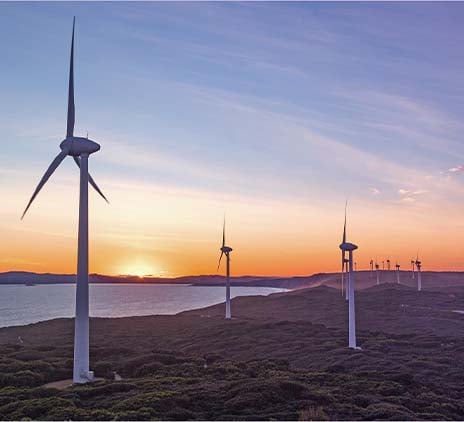
The 2022-23 Federal Budget committed over $20b towards renewable energy projects and initiatives in its push to cut carbon emissions by 43 per cent by 2030. Is it enough to aid the energy supply and demand challenge forecasted by the Australian Energy Market Operator (AEMO) in its recent 2022 Electricity Statement of Opportunities Report?
Considering Australia’s significant fintech and financial sector experience, it’s no surprise Victoria’s recent Intersekt Festival focused on leveraging Australia’s fintech market to its full potential.
The Queensland Building and Construction Commission (QBCC) has confirmed that from 1 July 2022, licensees must provide the QBCC with General Purpose Financial Statements (GPFS) when either submitting a Minimum Financial Requirements (MFR) Report to adjust reported Net Tangible Assets (NTA) or Allowable Annual Turnover; or complying with annual reporting requirements (if licence categories 4-7). The changes mean that licensees wishing to adjust their NTA and/or approved turnover should ensure an MFR Report is signed before 31 October 2022 and lodged with the QBCC before 30 November 2022.
The use of third party information is a reality of building an expert witness report. Compiling our areas of expertise with that of others can elevate findings and create a well-rounded, comprehensive report. But not all sources of information are created equal – and the Courts have strict requirements for what third party information is acceptable and what isn’t. In this article we look at the growing trend for an expert’s reliance on third party sources and the perception by the Court.
Following the announcement of the CPS tripartite audits in November 2020, APRA began issuing notices to regulated entities to undergo the independent assessment. The reviews are part of APRA’s four year strategy to increase the rigor of compliance with CPS 234: Information Security.
In preparation for FY22-23, it is important for Schools to reflect on the year that has been and factors that will impact future performance.
We saw COVID threaten the sustainability for many not-for-profit (NFP) organisations, forcing some to make operational changes or to shut their doors, and others to adapt and drive innovation to achieve their mission. But what does it mean to be a sustainable NFP, and how do these organisations then remain sustainable for years to come?
In October 2021, over 135 jurisdictions (including Australia) joined a ground-breaking plan to update key elements of the international tax system. The Global Anti-Base Erosion Rules (GloBE) are intended to ensure large multinational enterprises pay a minimum level of tax on the income arising in each of the jurisdictions where they operate. The OECD released the Pillar Two Model Rules on 20 December 2021, and Commentary to accompany the Rules on 14 March 2022. Further guidance is expected by way of an Implementation Framework, but that may not be completed and available until the end of 2022.
As the FY22 year-end financial reporting date approaches, we explore some of the important changes, current environmental risks and why it pays to start planning early.
APRA’s feedback focuses on ensuring recovery from high-impact cyber-attacks. Boards are encouraged to seek assurance on the entity’s likely ability to recover from a high-impact cyber-attack.
On Tuesday 23 November 2021, APRA released commentary following the conclusion of its pilot initiatives – the tri-partite audit and technology resilience data collection.
On Thursday 11 November 2021, APRA announced its proposed new attachment to Prudential Standard APS 220 Credit Risk Management.