Upbeat music in the background
Jessica Fox
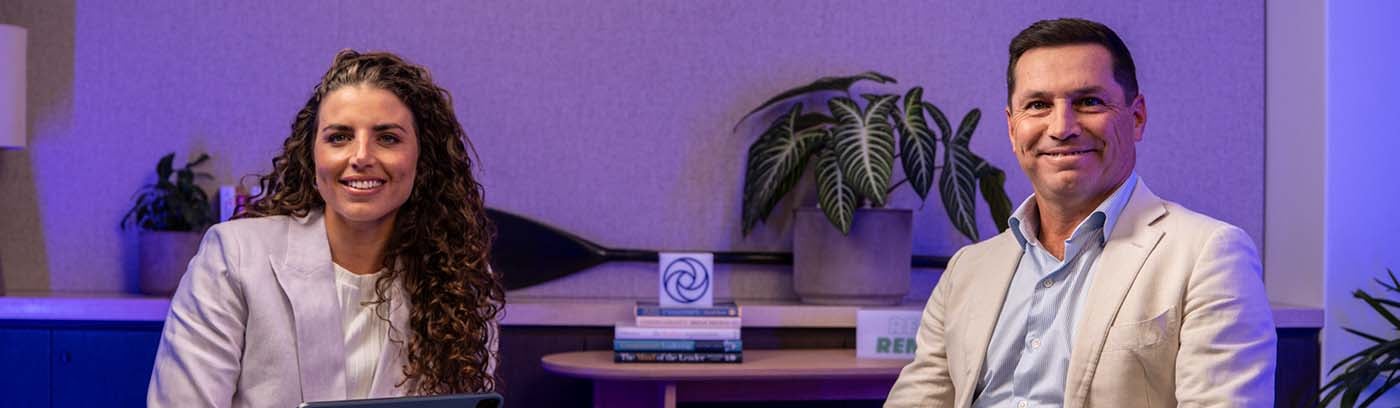
I'm Jess Fox. I've spent my life chasing remarkable. In this series, I'm meeting the people doing the same – in business, in life, and in their communities.
This year marks 50 years of Special Olympics Australia. Five decades of giving Australians with intellectual disability the chance to step up, to be cheered for, and to be seen for what they can do.
Jamie O'Connor is the CEO, and Grant Thornton Foundation has been alongside them for the last 8 years of that journey. I wanted to hear what remarkable looks like in their world.
Jamie, welcome. Thank you for joining us today. I've been looking forward to this chat. Obviously, sport is right up my alley, and especially when we're talking about the transformative power of sport, and you know, the skills and values that it can help foster.
The Special Olympics has its own athletes’ oath, which I love: “Let me win, but if I cannot win, let me be brave in the attempt.”
What does that oath mean to the people who say it?
Jamie O’Connor
Yeah, look, I'm not an athlete, so I don't get to say it, right? But I've seen our athletes deliver that message on a number of occasions, and um, it's honestly spine-tingling. You get goosebumps when you watch them deliver that message. So, it's peer-to-peer, which is the important thing, right? So, the athletes talking to the athletes, but not everyone gets the opportunity to stand up in front of their peers and deliver that oath ahead of a major event or a games or something along those lines, and you see them they grow a foot taller, they stand there with their chest out with such pride. It's really extraordinary to watch it play out, but I think it's like it epitomises what our movement is about. It's not so much about winning; it's just about having a crack, putting a toe on the start line, and having a go, and, you know, you see that play out on a day-to-day basis across our programs.
Jessica Fox
That sense of courage in the attempt; it's more about it's more than just winning and it's about, you know, doing your best and breaking down those barriers and it must be so inspiring to be around every day. You've recently joined as CEO. What drew you to the movement?
Jamie O’Connor
Look, I've had a, you know, 20-year career in sport and I've been fortunate to have done some great things, but fundamentally I've, you know, led a life of real privilege, so for me it was about, you know, having an opportunity to be able to provide, you know, for people who haven't had the opportunities that that I've had.
So, for me it was about trying to come in and make an impact. I’d spent six or seven years in my previous role, and I was looking for something different. I was looking for something that could that could have an impact, and this was the first one that popped up that that really caught my eye and the community is phenomenal, you know, it's so infectious.
So as soon as I sort of um, saw it and started to engage in the process, I was absolutely heart set on getting the role. Yeah.
Jessica Fox
I'm sure you're already making an impact. I think we talk about that belief in sport as a vehicle for change and that has been put into practice as well through partnerships like with the Grant Thornton Foundation, which has been part of it now for eight years.
So, particularly through your schools program, tell me a little bit more about the Unified Sports program. What's it all about?
Jamie O’Connor
Yeah, it's really unique. So fundamentally, it's a program that allows people with intellectual disability to take part in sports programs with people without intellectual disability and particularly in a school environment, it's a, you know, it's a great program for athletes to be able to connect more broadly to their, schoolmates and their peers. So really important program for us.
Jessica Fox
It's creating that awareness, the education around it, making it more inclusive for, you know, those students, but also their peers, the teachers. I read somewhere it was 20,000 students. Tell me a little bit more about what what's been made possible through this partnership.
Jamie O’Connor
It's life changing. I don't say that flippantly, right? It's genuinely life-changing when you see some of the opportunities that we've been able to go into schools and deliver programs that without the partnerships like this, we wouldn't have those opportunities to do that.
So, we're now a chance for us to engage a totally different generation of athletes and people with intellectual disability who are crying out for an opportunity to engage in sport and you know, there's lots of different feel-good and great stories that are coming out of our program delivery, but there's one kid in particular, his name's Liam, and his teacher wrote into us and gave us his story and I'll share it with you.
So, he's the only kid in his class that has been diagnosed with intellectual disability and prior to the Unified Sports program and our delivery into that 8-week program into their school, he was struggling. He was socially not so much excluded, but he wasn't included.
He was struggling through class, struggling to connect in playground and whatever else. Fast forward the end of the 8 weeks of the delivery of program, he's more engaged in class, he's socially more connected with his peers in the playground and importantly, his peers have a greater understanding of him as an individual.
So, as I say, it's genuinely life changing.
Jessica Fox
So, that's the groundwork and then there's the moment when it all comes together. You're about to host the National Games in Melbourne and it's the 50th anniversary. What does that moment mean for the movement?
Jamie O’Connor
It's a culmination of four years of effort for our athletes, right? But, for us as a movement, the 50th year anniversary gives us an opportunity to be able to shine the torch on these phenomenal people.
So, we'll have almost a thousand athletes attend and compete across 12 different sports over the week in October, but fundamentally it's an opportunity for us to shine a light on their efforts and you know, we've got a World Games coming up in Chile.
So, there's a pathway through the National Games to Chile. So, whilst participation is our main focus fundamentally there's also 60 athletes who are still trying to get themselves to world games. So, there's that part that gives us a great opportunity to shine a light on the athletes, to shine a light on the movement and tell great stories.
Jessica Fox
I'm sure it'll be a great way to celebrate 50 years. So, you've been breaking down barriers for 50 years. What does the next 50 look like? What's your vision and what do you hope changes for Australians with intellectual disability and for the rest of us?
Jamie O’Connor
50 years in this day and age is going to move really quick right when you consider what technology does but fundamentally, we need to continue to break down barriers. People need to understand what's possible and give these people with intellectual disability an opportunity to compete or take part and be genuinely included.
Health outcomes are the critical thing. You know, people with ID are more likely to be a high propensity of unemployment, more likely to be low socio-economic, greater physical and mental health challenges. So, breaking down the barriers that allows us to be able to correct some of that data.
Life expectancy of someone with intellectual disability is almost 20 years less than someone without. So fast forward 50 years, I'd love to see the gap change.
Jessica Fox
I think it was Nelson Mandela who said sport has the power to change lives, but it then trickles through every part of society, right? You talked about those and I think there's so much possibility in that vision.
Jamie O’Connor
Yeah.
Jessica Fox
I want to finish… we ask every guest this…
Jamie O’Connor
Sure.
Jessica Fox
Jamie, what does remarkable look like for you in your mission?
Jamie O’Connor
Our athletes.
Honestly, come to National Games October 19-23 in Melbourne and you'll see remarkable play out on a on a minute by one day by day basis. It's extraordinary.
That's remarkable.
Jessica Fox
Truly remarkable and I cannot wait to watch them shine at the National Games. Jamie, thank you so much for your time today and for joining us.
Jamie O’Connor
My pleasure. Thanks for having me along.
Jessica Fox
You've just heard what remarkable looks like in their world. What does it look like in yours? Thanks for coming along. There are more journeys to meet, and I'll see you at the next one.
Upbeat outro music