Many organisations are grappling with the myriad of employee agreements and obligations that result in a wide variety of payments to their people.
Media scrutiny has been intense around businesses not paying their people correctly.
In 2019 alone we've seen revealed that a major media outlet, a major airline, many retailers and restaurants, a Not-for-Profit, a Big 4 bank and a law firm had all under-paid some of their staff. In our experience, most often not paying people correctly is a case of failed processes unable to spot red flags, rather than a case of intentional behaviour.
In order to both maintain your reputation and minimise Government penalties, we highly recommend proactively assessing whether your business has correctly applied its industrial relations obligations.
Inherent risk associated with payroll
Payroll and superannuation have a high inherent risk profile. The sheer quantity of funds paid on a regular and ongoing basis – calculated through different awards and enterprise bargaining agreements – is governed by complex and State-specific regulatory requirements. Couple this with legacy payroll systems and you have a complicated system to navigate to ensure your employees are remunerated correctly.
![GTAL_2019_GTC_payroll_infographic.png]()
Developed solution to mitigate risk
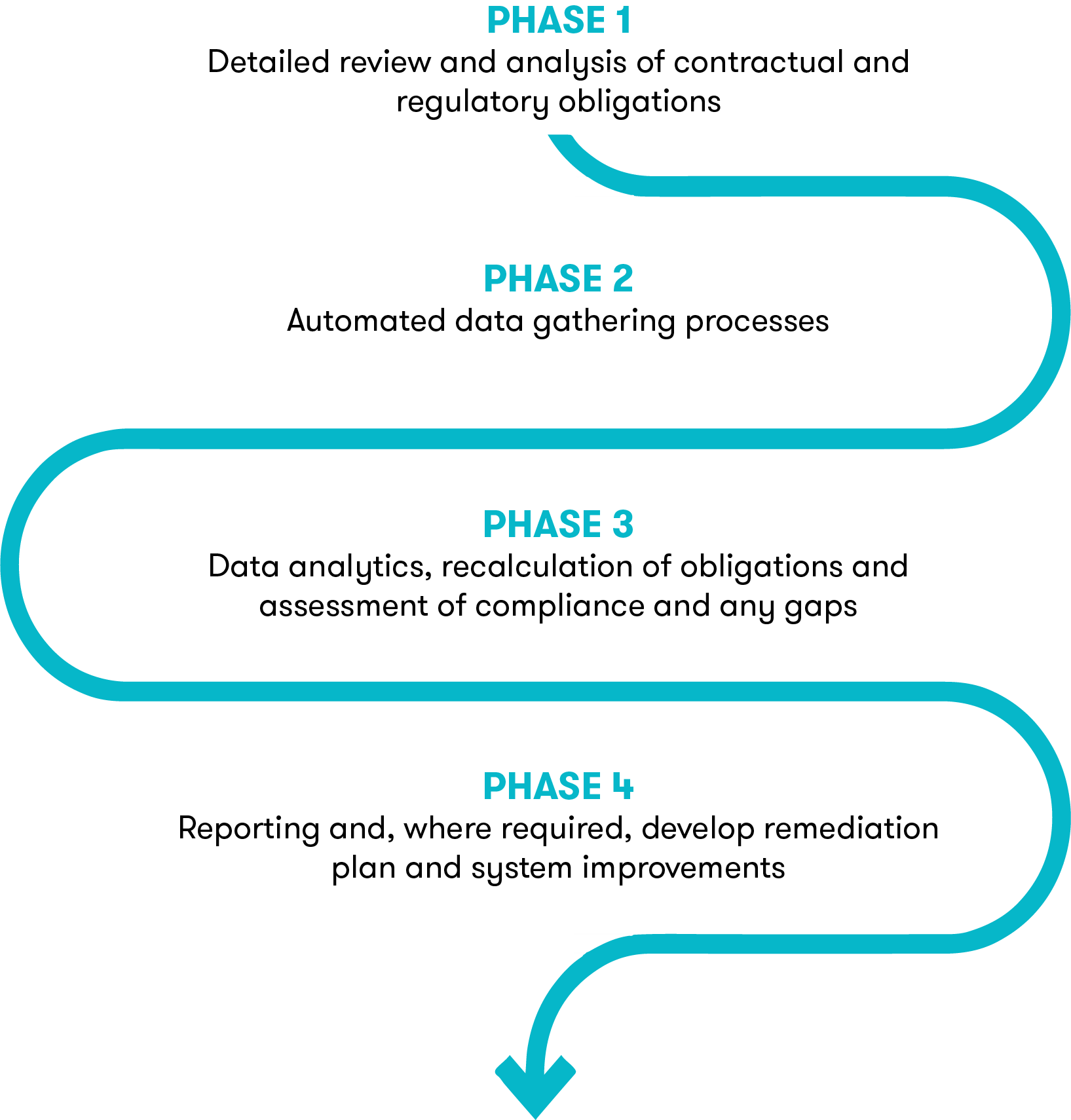
We bring together a combination of experts covering all bases for your pay review process: tax and superannuation for statutory requirements; technology for the data analytics and automation tools and systems used to review; forensics for spotting exposure points and to manage the full set of pay obligations in an efficient and effective way; and business risk for compliance and risk mitigation controls, processes and systems.
Using our comprehensive Payroll Assurance Review and Recalculation tool, our team applies a lens to your full set of remuneration processes and obligations to identify issues and, importantly, root causes of potential discrepancies. We can then assist with updating processes for future payments, recalculating correct past amounts, and developing a remediation process where required.
Our approach is designed to mitigate your organisation’s risk, and to provide the level of assurance your organisation needs to meet its employee obligations now and into the future.