The Australian Federal Budget for 2026-27 will be handed down in May 2026, the first budget since Labor's re-election in 2025.
Today’s business leaders navigating Australia’s M&A landscape need to look beyond short‑term performance and financial metrics alone. What matters most to investors is a strong, scalable and defensible business, particularly in an environment shaped by geopolitical and economic uncertainty. Increasingly, ESG and sustainability considerations are not add‑ons, but core to business strategy and long‑term value creation.
The Full Federal Court confirms that owner and beneficiary benefits in family businesses are not automatically subject to FBT, reinforcing the meaning of “in respect of employment” and providing guidance ahead of the 2026 FBT season.
Australians are currently struggling with cost-of-living increase including essential goods such as housing, utilities, petrol and groceries. Consequently, household budgets are being altered across the country to tighten spending and temporarily alleviate financial pressures.
On Tuesday 25 June 2024, Chief Minister Andrew Barr handed down the Territory’s Budget. A predicted $830.8m deficit for 2023-24 will likely return to an estimated surplus of $179.5m by 2027-28.
While Family business make up 70 per cent of the Australian economy, only 12 per cent makes it to the third generation. As the first and second generation work on and in the business, it’s crucial to try and keep it alive – to uphold the legacy and ensure the business thrives for future generations.
In this series, we look at the different perspectives of those who are most affected by forecasting and budgeting. Learn from lenders, business owners, and investors who use forecasting and budgeting for different purposes and understand how to use these tools effectively for business decisions.
Global Internal Audit Standards (GIAS), it aims to improve and clarify both mandatory requirements and recommended guidance for the Internal Audit function, in turn improving the quality of Internal Audit across the industry.
Payroll remediation has become a hot topic in recent years with major issues continuing to be relevant for both small and large employers alike. Some of Australia’s most well-known brands have recently found themselves dealing with payroll issues – most often inadvertently.
In the latest episode of Beyond the Numbers with Grant Thornton, Innovation Incentives Director Simone Barker and Michael Climpson, National Head of Manufacturing and a Partner in our Audit & Assurance team discuss what the mid-sized manufacturing sector currently looks like in Australia, how inflation has impacted the sector and what the Future Made in Australia initiative will look like in practice.
There exists a wide array of advantages that businesses can realise in integrating important Environmental, Social and Governance principles. These include reducing costs, improving operational efficiency, enhancing reputation, increased accountability, and attracting talent.
The Treasury Laws Amendment (Making Multinationals Pay Their Fair Share – Integrity and Transparency) Bill 2023 (‘the Amendment’) was passed on the 27 March 2024 by the Federal Government.
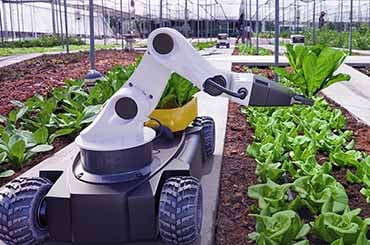
To facilitate continued innovation in the Agribusiness sector, the Federal Government’s Research and Development Tax Incentive supports companies to undertake research and development activities that meet the eligibility criteria.
As the end of the financial year approaches, it’s a timely reminder of three key employment tax lodgements and the common errors we see in the market.
Yalari is a not-for-profit organisation offering secondary education scholarships to Australian schools for First Nations students. The organisation champions the value of education and nurtures an encouraging community for students to thrive in their studies.