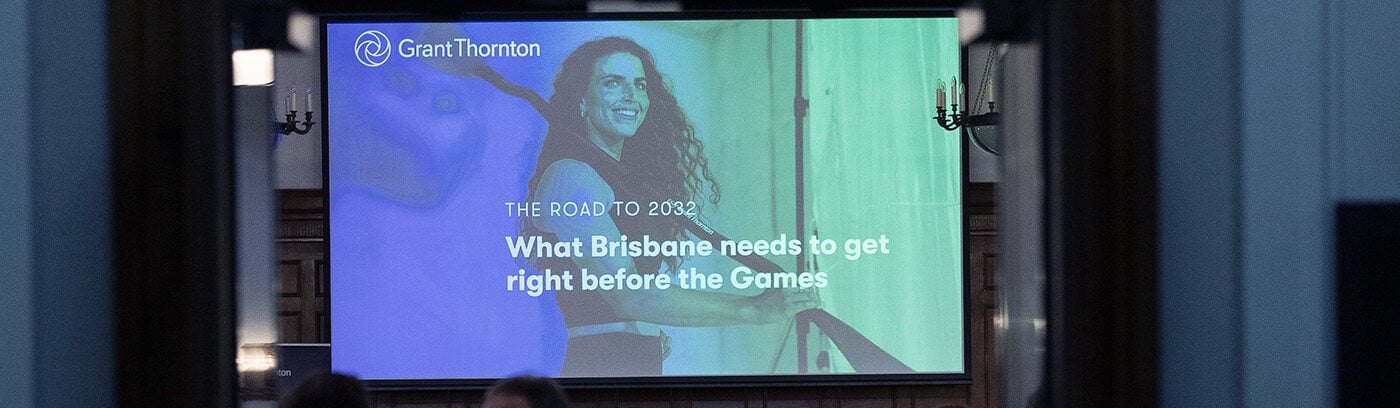
Strong controls, governance, assurance and decision-making all play a critical role in ensuring megaevents deliver enduring benefits, a theme highlighted at a recent Brisbane discussion on leadership, performance and legacy featuring Grant Thornton brand ambassador Jess Fox.
However, the real measure of a project’s success is not whether it was delivered on time or within budget, but whether the outcomes have been positive and lasting.
For Brisbane and the other host cities, the 2032 Games offer a once-in-a-generation chance to build a positive legacy for a rapidly growing region. Everyone including councillors, management and Audit and Risk Committees play important roles to make the most of this opportunity.
Delivering outcomes, not just projects
While councils rightly place significant emphasis on managing the risks to project delivery, especially given the large investments being made, measuring longer term benefits arising from these initiatives often receives less focus as the organisation moves onto the next big project.
However, the real measure of a project’s success is not whether it was delivered on time or within budget, but whether the outcomes have been positive and lasting. Communities will ask questions about the project including:
- Did it improve services in our region?
- Did it create opportunities for local businesses and residents?
- Did it make our community a better place to live?
Most councils have good governance over delivery. Budget performance, procurement, contract management, risk, compliance and reporting all receive close attention throughout implementation. This is appropriate, particularly where projects involve substantial public investment or heightened scrutiny.
But once a project is delivered, governance attention often shifts elsewhere.
Responsibility for long-term outcomes can become fragmented across business units, benefits realisation reporting reduces over time, and success is assumed because the project was completed, rather than measured against what it was originally meant to achieve. The risk is that, years later, a council may struggle to demonstrate whether the investment delivered the value envisaged when the business case was approved.
This matters because legacy extends beyond physical assets. New venues and facilities are important, but lasting success also depends on economic participation, community activation and benefits that reach the wider region. A new community precinct may be delivered successfully. A tourism initiative may launch on schedule. A regional development project may meet every milestone. Yet, if a council cannot show how those investments improved outcomes for its community, the most important part of the story is missing.
The question shouldn’t simply be “did we complete the project?”, but rather “did we achieve the outcome and how do we know?”
Legacy starts now
A recurring theme with megaevents is that legacies need to be planned upfront rather than left to chance. Much of the conversation is around long-term community benefit, activating new infrastructure, and making sure benefits reach beyond the major precincts to the wider region.
Councils have the opportunity to build on their project delivery discipline by creating clear accountability, ongoing oversight, and processes to measure and report on community outcomes well after the project is delivered. The same principle applies to any significant council investment, from community infrastructure to a tourism initiative or a regional growth program. The underlying question is always the same: how will we know in ten years' time whether today's investment delivered the legacy we intended?
What needs to change?
If the true test is what an investment delivers in ten years’ time, councils need a way to see early on whether their governance will get them there. Councils need to evolve their approach to governance and risk management, which has traditionally focused on short to medium term impacts to councils’ strategies and services, rather than evaluating longer term benefits.
Councils’ Internal audit teams can play a key role in this evolving focus working closely with management and the audit, risk and improvement committee. Using their unique position within council, Internal audit is well placed to help drive meaningful change and better align projects to strategic objectives and long-term community value by being involved in major projects early and asking key questions like:
- How well defined are the long-term benefits to the community in the project business case?
- How objectively can the benefits be measured and by who?
- Who in council will be accountable for delivering these long-term benefits?
- If benefits are not being achieved, how will decisions be made to get things back on track?
- How well does council’s risk management framework identify and mitigate risks to long-term community value delivered by major projects?
- How will council demonstrate success to its community five or ten years from the megaevent?
Leaving a legacy
As we catch and ride the wave of Brisbane 2032, history tells us that what our communities will remember, long after projects are delivered and the Games are run, is whether they have been left better off in the long run.
If you’d like to discuss how your council can benefit from a conversation about creating legacy, please reach out to our team of experts today.
This article was contributed by Joshua Rowland – Manager, Risk Consulting
Brisbane 2032 Olympics & Paralympics