However, when looking at Estate Planning, sometimes families only consider one generation at a time. Without proper communication, the dream of setting your family up financially could be just that – a dream. Therefore, it’s critical families look at wealth transfer from a multigenerational perspective.
Example scenarios
Family one
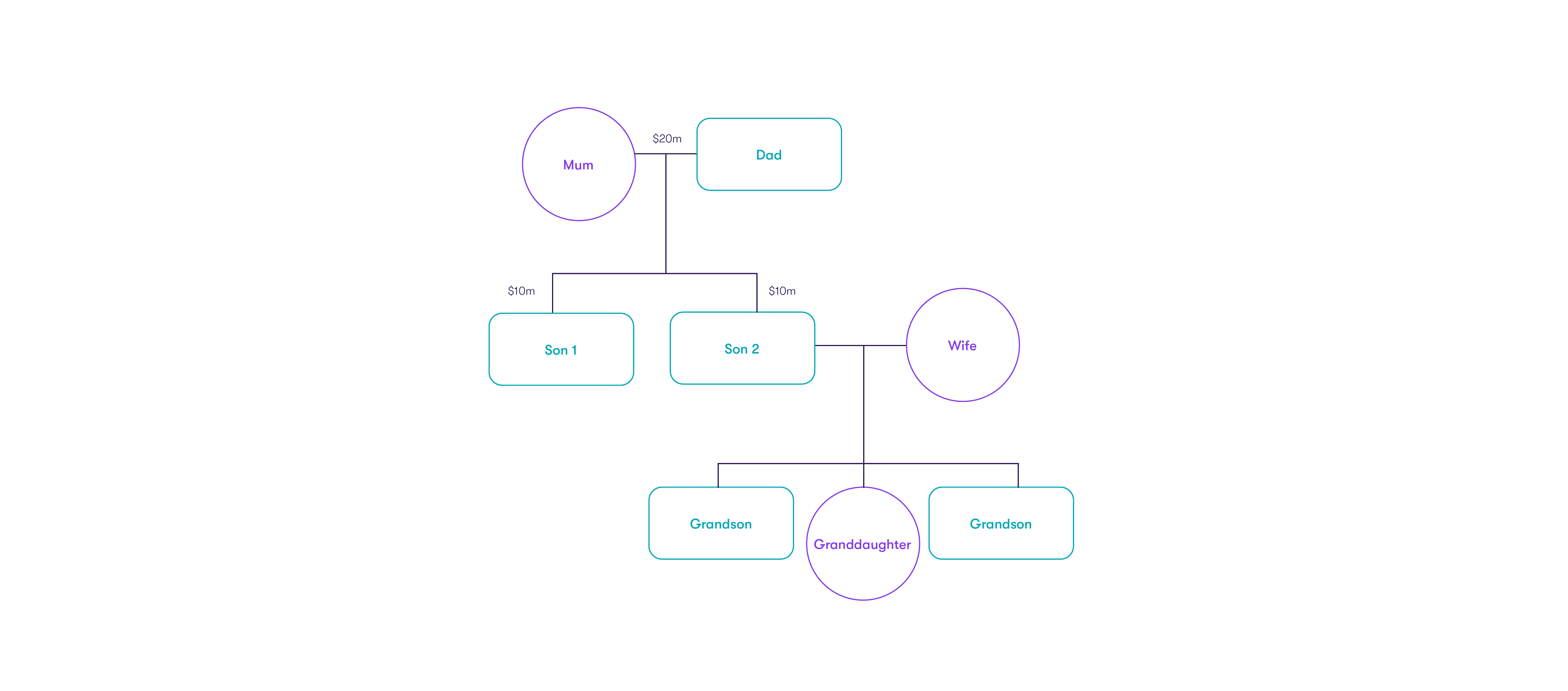
A husband and wife have accumulated a significant estate value of $20m and want to leave their wealth to their two sons equally. One son is childless while the other is married with three children. The grandparents are confident their wealth will provide financial security for their grandchildren.
![]()
click to enlarge
However, several scenarios could disrupt this equitable distribution of wealth. For example, the childless son could decide to distribute his wealth through charity giving or he could decide to gamble his money; the other son could lack financial acumen and not invest appropriately.
Additionally, in the unfortunate event of a tragic accident, the son’s entire estate could pass to his spouse. If she remarries, the original family wealth might not be passed down the bloodline.
To prevent this scenario, a multigenerational perspective in Estate Planning should be adopted. This approach ensures the grandchildren and subsequent generations can benefit from the wealth created by previous generations. Families do want to ensure non-blood-related family members are well looked after, with a desire to safeguard their wealth for the benefit of direct descendants. This ensures the family legacy will thrive for future generations.
Family two
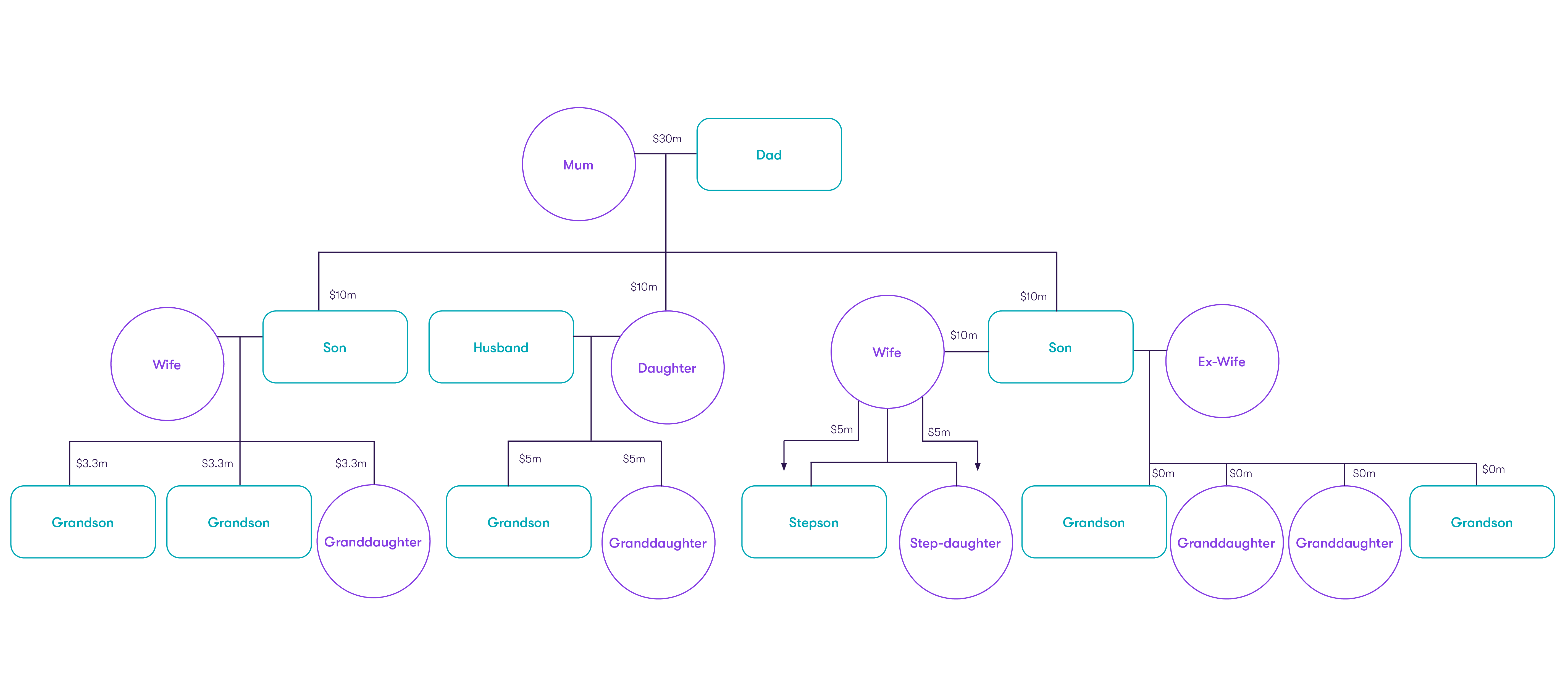
A husband and wife have accumulated $100m. As their children are already financially established, the wife is now focusing on providing financial stability to her grandchildren as her husband has passed away. One of her sons has recently remarried, and his will could request all wealth transfer to go to her, with a possibility the biological grandchildren might not inherit any of the wealth.
![]()
click to enlarge
This scenario highlights the importance of comprehensive Estate Planning that considers family dynamics. Being able to look ahead in Estate Planning is especially critical when substantial wealth is involved, to maintain the family’s financial legacy and support future generations.
Multigenerational Estate Planning is complex
These two case studies showcase the complexity of Estate Planning, but also highlight the importance of:
- Communication amongst family members.
- Ensuring children receive financial acumen education so they can continue to grow the family wealth.
- Always approach Estate Planning from a multi-generational lens.
We’re here to help
Preparing Estate plans is critical. This should be a collaborative process amongst family members to ensure everyone is on the same page. Should you need any help in this area, please feel free to reach out. We work with lawyers to ensure your documentation fits your family.
Learn more about how our Succession planning services can help you