Below are our top 10 tips for helping you navigate FBT changes that may impact your business, some common problem areas, current ATO focus areas and what’s on the radar for future developments.
1. The FBT rate is currently 49% for the 2017 FBT year. From 1 April 2017, the rate will decrease to 47% to realign with the top marginal income tax rate following the removal of the budget repair levy of 2%. This will also mean that the Type 1 and Type 2 gross up rates will change from 1 April 2017 to 2.0802 and 1.8868 respectively. For not-for-profit employers, whilst the $31,177 and $17,667 grossed-up caps for concessional treatment drop to $30,000 and $17,000 respectively, the $5,000 grossed-up cap for meal entertainment and entertainment facility leasing expenses remains at $5,000. This means the taxable value of benefits that may be salary packaged under this cap changes.
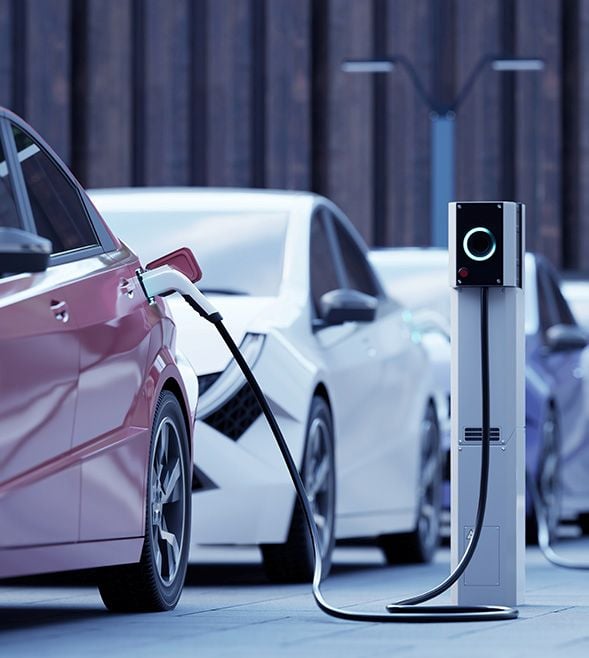
2. The cents per kilometre method for calculating motor vehicle expenses now requires use of a flat 66 cents per kilometre, regardless of the vehicle’s engine size. When applying the otherwise deductible rule, this method is available only up to a maximum of 5,000 business kilometres per vehicle. This method is also available for electric and hybrid cars. If you anticipate that a vehicle will travel more than 5,000 business kilometres during an FBT year, it may be time to consider using the logbook method.
3. The ATO is continuing to use various data matching programs. One successful program involves data matching with the Road Traffic Authorities with a view to identifying underpayments of FBT relating to vehicles. This also picks up incorrect exemption of certain utes and panel vans etc, that are supposed to have private use limited to travel between home and work and other minor, infrequent and irregular private travel. Employers can try addressing this issue by having employees sign a declaration, by ensuring policies limit private use to travel between home and work and only minimal/insignificant other private use, and perhaps by having employees maintain log books. Grant Thornton’s Elizabeth Lucas is currently working on a committee with the ATO to develop a ‘safe harbour’ for employers to apply in this regard.
4. A safe harbour that has been released relates to the use of log books for fleets of ‘tools of trade’ cars. For car fleets greater than 20 cars that meet the criteria outlined below, provided at least 75% of the fleet have valid log books, an average business use percentage can be determined across all the cars with valid log books and this percentage applied to the whole fleet – both for the purposes of determining the FBT liability, as well as the amount to report on employees’ payment summaries. This safe harbour can be applied to fleets where:
- The cars are predominantly for business use;
- It is mandatory for employees to complete log books;
- The employer chooses the cars or provides a limited number of choices to the employees;
- The cars are not salary packaged; and
- The cars are under the luxury car limit.
5. FBT on entertainment can be a significant cost to the business, so we recommend these steps to minimise your FBT cost:
- Eliminate all sustenance from your entertainment calculations - eg. morning teas on the business premises, meals for travellers, meals incidental to seminars, etc.
- Determine the taxable value under the ‘actual method’. Unless the organisation is exempt from income tax, eliminate all expenses related to food and drink consumed on the business premises and all minor benefits – to the extent this is possible with the records you have or with what you know about the pattern of entertainment benefits for particular employees. Elizabeth Lucas is working with the ATO on developing a safe harbour to be applied to minor entertainment benefits, but this will not be ready for the 2016/17 FBT year.
- Determine the taxable value under the ‘50/50 split method’. This is easy to apply and doesn’t require detailed records to be maintained, but may result in a higher FBT liability than the ‘actual method’.
- Remember the income tax treatment and GST input tax credits follows the FBT treatment – ie. subject to FBT = deductible and creditable, not subject to FBT = non-deductible and not creditable.
6. An issue that often confuses employers is whether someone is living away from home or travelling on business. The third option of relocating permanently is usually slightly easier to identify. Elizabeth Lucas has participated in an ATO consultation related to producing a ruling to help taxpayers distinguish between these scenarios in order to determine the relevant income tax and FBT treatment. Our recommendation when looking at such scenarios is to consider the fundamental rules around deductibility rather than blindly following current practices. You might end up with a better result than expected.
7. The ATO has employee incentive programs on its list of focus areas. There are lots of different programs, so here are a few thoughts in relation to some of the most popular ones:
- If certain employees pay for business expenses on credit cards attached to their personal membership of a loyalty reward program, the acceptance of their employer of this arrangement and a high level of points may trigger an FBT obligation relating to the benefits for which the points are redeemed.
- Benefits provided under internal reward programs are unlikely to qualify for the minor benefit exemption if the reward program is a formal one – especially where the rewards for reaching a particular target are known.
- Providing employees access to discounted goods and services from third parties can attract FBT. However, if the discounted rate can also be accessed by other similar groups of people, then the value of the benefit may simply be what the employees are paying – leaving nil value that is subject to FBT.
- Ad hoc thank you gifts with a value less than $300 are likely to be exempt minor benefits.
8. From 1 January 2017, 100% of the grossed up reportable fringe benefit amount will be included in the means tests for Centrelink purposes. This represents a change from past practices for certain government benefits. However, this change does not apply to public benevolent institutions, health promotion charities and certain hospitals and public ambulance services. For these organisations, the grossed-up value and the taxable value of reportable fringe benefits will each be used for different government concessions/levies.
9. The ATO is moving towards a Single Touch Payroll Reporting system. This system will be available from 1 July 2017 to employers with more than 20 employees, and will be mandatory for those employers from 1 July 2018. Essentially, this will allow reportable fringe benefit information (as well as gross payments and PAYG information) to be reported electronically to the ATO. This would also remove the need to issue payment summaries to employees.
10. Whenever you amend an FBT return, remember that this has a flow on effect for payroll tax and workers compensation insurance purposes. Data matching between the ATO and the State Revenue Offices will often pick this up, and it’s usually a much better outcome for the employer if they are on the front foot.