We often recommend introducing a formal family governance structure while the second generation is being transitioned into the business. But why?
Success in decision making
As much as there is usually a mutual trust between children and their parents within a family business, a family governance framework helps to set the second generation and future generations up for success around decision making. It ensures they all have access to information about the business to feel connected and heard in relation to the future of the business, as well as the goals they are trying to achieve as a family.
Reasons for implementing a formal governance structure
1. The first generation is a husband-and-wife team, and as much as they may argue or disagree, they both want the same outcome – the best for their children. The second generation – whether you have two children, three or more – you have individuals who are each thinking of the outcome they wish to provide their children, and – in many families – each child will have a partner. This influence can change family members views, but with a family governance structure, there is a documented way of making decisions for the business.
2. There can be relationship break downs in the second generation, which can lead to new partners, more children, possibly stepchildren, people outside of the family business and another new perspective, highlighting the need for a documented approach to decision making.
3. Often, the second and future generations don’t contemplate the impact their Estate Plan has on their siblings and the future of the family business. Without structured governance and challenging conversations to discuss what does good governance look like in the future, many people in the next generation think they need a will to leave everything to their partner. What they don’t consider is that means your siblings could be in business with their brother or sister-in-law. Should your partner re-marry or want to leave the business, this could jeopardise your children ever having a chance of owning the family business.
Testamentary trusts: another opportune time for family governance
Another opportune time to introduce family governance is when the parents leave an asset to a testamentary trust, or each sibling receives a testamentary trust, and the assets are held jointly via all trusts. In some cases, this could be the first time siblings have ever had to work together in the family business or make decisions in relation to their assets.
Rather than starting in a hostile manner or reverting to childhood behaviours where often one sibling is in control, family governance introduces facilitated conversations, providing everyone a voice. A formal governance structure allows for a structured framework, enabling you to reach the desired business outcomes.
Our process
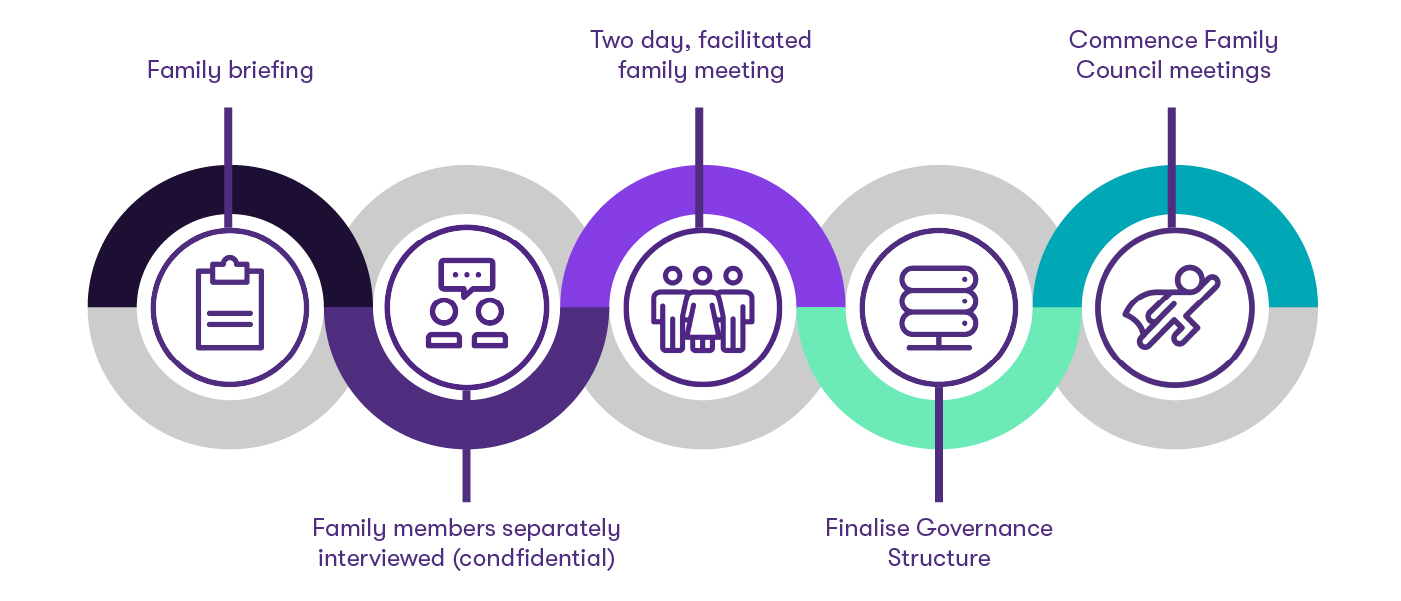
How does the family governance process work? We’ve detailed a step-by-step process to help facilitate and develop the right family governance structure for your business.
![]()
Set up your second generation for success
To set up your second generation and future generations for success, we recommend implementing a formal governance structure for your family business before there are disagreements.
Want help with facilitating discussions or developing the right structure for your family business? Reach out to your Family Business Consulting representative to ensure your business benefits from implementing a formal governance structure today.