On Tuesday 10 May 2022 the Northern Territory Chief Minister Michael Gunner handed down his final budget.
The 2022-23 Northern Territory budget outlined a $1.1b deficit and net debt of $8.7b, which is an improvement in the forecasting contained within the 2021 Budget which forecasted a 2022/23 deficit of $1.2b and net debt of $10.1b.
For the first time since 2016, the Territory is projecting a net operating balance surplus from 2024-25, with the government's operating costs expected to fall from a $253m deficit this year to a $60m surplus by 2024-25.
Facilitating this is an upwards revision to revenue, consisting of $1.8b in GST and $336m in Territory taxes and royalties. This increase in revenue has offset projected increases in expenditure over the forward estimates.
Shortly after delivering the 2022-23 Territory budget, Chief Minister Michael Gunner announced his resignation as Chief Minister, making delivering the 2022-23 budget his final act as Chief Minister. Mr Gunner will continue on as a Member of Parliament and move to the backbench, with Deputy Chief Minister Nichole Manison replacing him.
Key highlights
- $1.9b for health, including $36.4m to upgrade the Royal Darwin Hospital mental health inpatient unit and $24.7m to continue building the new Alice Springs ambulatory care centre.
- $1.65b for transport infrastructure in the form of roads, aerodromes, jetties and barge landings.
- $897.3m for housing, with $690m for remote Aboriginal housing, including the $301m Remote Housing Package and additional $235.8m for the Remote Housing Investment Package.
- $1.3b for education, skills and training.
- $510m for police, fire and emergency services.
- $135.5m to upgrade infrastructure in Kakadu and Jabiru, with an additional $51.2m to grow tourism in the top end region.
- $89m contribution to Workforce NT.
- $86.4m for tourism and events to support the Tourism Comeback plan.
- $2.2m towards strengthening vocational education and training in schools.
Revenue Measures
The revenue measures effective from 1 July 2022 are as follows:
- An exemption from stamp duty for an Australian citizen over 18 who acquires newly-developed land from a registered building practitioner on which there is, or will be, a home constructed by the builder which is used and occupied as the acquirer’s home for at least 6 months. The exemption will remain available for five years, and there does not appear to be a value cap on accessing the concession.
- Abolition of the property activation levy, while retaining the obligation to lodge and pay returns for 2021 22. This was a unique tax imposed by the Territory Government from 1 July 2019 as an incentive to encourage the revitalisation of the Darwin CBD through innovative land use. The Budget states that the “visual presentation and attractiveness of the Darwin central business district (CBD) since the introduction of the levy in 2019” has improved, thereby eliminating the need for the tax.
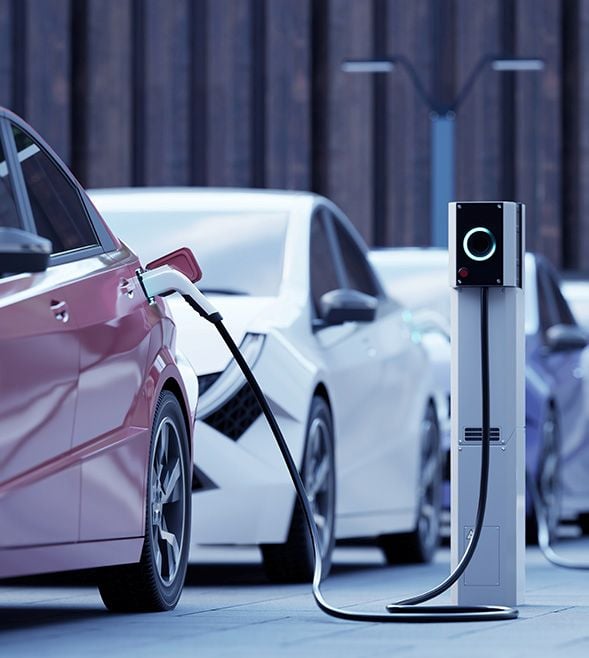
- A stamp duty concession of up to $1,500 on registration of new and second-hand battery electric vehicles and plug-in hybrid electric vehicles, available for five years. The same vehicles are also exempt from the registration component of vehicle registration fees. The follows the move of other States and Territories in using revenue measures to encourage the take up of electric vehicles.
- Indexation of revenue units, penalty units and monetary units, adjusted to better reflect policy neutral inflation in the Territory, in 2022-23.