Tax has always been a fundamental part of how businesses contribute to society. Its role within the Environmental Social Governance (ESG) space is starting to build strong momentum. As organisations sharpen their focus on ESG outcomes, tax considerations and the governance structures that support them have become critical markers of responsible management and long-term value creation.
The Treasury Laws Amendment (Building a Stronger and Fairer Super System) Bill 2026 and Superannuation (Building a Stronger and Fairer Super System) Imposition Bill 2026 were passed by the House of Representative on 5 March 2026, and subsequently passed through the Senate late on 10 March 2026, with no further changes and will take effect from 1 July 2026.
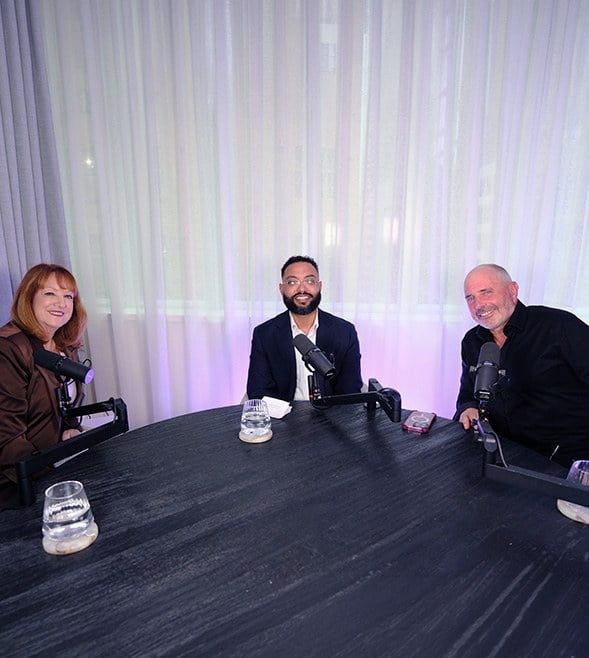
In this episode of The Remarkables, we speak with Joyce Jiao, CEO and Co‑founder of Herekind.
Small business restructuring was introduced in 2021 as a response to COVID-19. It is a process designed to help distressed businesses avoid shutting down. Despite being around since then, there remains uncertainty in the market about how the process works and who is eligible.
Over time, governments have shifted away from the direct provision of certain community services, instead commissioning them through a competitive market largely serviced by not-for-profit (NFP) organisations.

What Australia’s Carbon Leakage Review means for trade, imports and business costs
In this episode of The Remarkables, we speak with Joyce Jiao, CEO and Co‑founder of Herekind.
Payday Super PCG 2026/1: key changes, compliance approach, employer readiness
Treasury has released the most recent rework of the proposed Division 296 tax. Although it has provided some much-needed relief from the original draft, the rework now includes addition hurdles requiring careful planning and consideration.
The ATO has released a draft update to PCG 2019/1, proposing several important refinements to the transfer pricing risk assessment framework for inbound distribution arrangements. The guidance is relevant for businesses operating as inbound distributors.
In this episode of Beyond the Numbers with Grant Thornton, we welcome back AML/CTF experts Neil Jeans and Katherine Shamai. They unpack AUSTRAC’s starter kits, share practical tips for embedding compliance into business culture, and explain why it’s critical to start mapping out your designated services now.
The AUSTRAC AML/CTF Starter Programs provide a structured pathway to achieving AML/CTF compliance that will significantly reduce the effort and cost of AML/CTF compliance for entities required to meet AML/CTF obligations under Tranche 2.
Across Australia there are regions experiencing a historic transformation fuelled by a combination of significant investment in infrastructure projects and an increase in population. Western Sydney is an example where the economy has expanded to become the third largest in Australia, contributing $100b to Australia’s GDP or 8 per cent of total GDP.
Starting from 1 July 2026, the general transfer balance cap will increase from $2m to $2.1m, allowing further tax benefits for superannuation fund members.
As Australia prepares for the landmark Anti-Money Laundering and Counter-Terrorism Financing (AML/CTF) reforms – set to take effect in the coming months – businesses across sectors face a pivotal moment not just to comply with how to manage financial crime risk, but to transform themselves for the better. The real challenge lies in building a culture that embeds AML obligations into the DNA of an organisation.