Explore retail market insights, M&A trends, value drivers and growth opportunities shaping the sector, and learn how to build a stronger retail business.

Filter insights by:
Popular topics
Featured insights
In this special episode of Beyond the Numbers with Grant Thornton, Private Enterprise Partner Beau Chaperon hosts the show and sits down with Lea Hicks and Richard Fox to discuss resilience, leadership and the relationships that help individuals and organisations navigate change and achieve lasting success for Western Sydney.
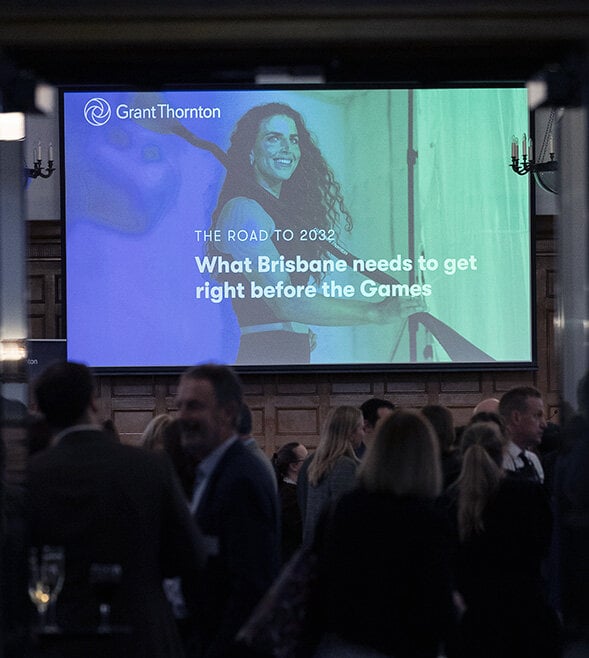
Legacy is often associated with the athletes, infrastructure and moments that capture public attention. Yet the foundations of a lasting legacy are built well before the event begins and continue long after it ends.
Latest insights
Australia has commenced reforming its Anti-Money Laundering and Counter-Terrorist Financing (AML/CTF) regime including the ‘Tranche 2’ reforms, which expand AML/CTF compliance to apply to additional professions including lawyers, accountants, real estate agents, property developers, and precious stone dealers.
In this episode, Ifrin chats through her role at SisterWorks, the tangible impact their programs have had on migrant women, and why she’s so passionate about the work they do within the community.
Money Laundering / Terrorism Financing/Proliferation Financing (ML/TF/PF) risk assessment is a process of identifying, assessing, and understanding the risks of money laundering, terrorist financing, and proliferation financing (ML/TF/PF) that an organisation may face. It involves evaluating various factors to determine the level of risk and the implementation of appropriate measures to mitigate those risks.
Australia is reforming its Anti-Money Laundering and Counter-Terrorist Financing (AML/CTF) regime by introducing an outcomes-based framework to enhance effectiveness and align with international standards.
Australia's amended AML/CTF Act introduces an outcome-based framework, focusing on achieving effective results in combating money laundering and terrorism financing (ML/TF) rather than just adhering to prescriptive rules. This approach aligns with international standards set by the Financial Action Task Force (FATF).
Money Laundering / Terrorism Financing (ML/TF) risk assessment is a process of identifying, assessing, and understanding the risks of money laundering and terrorist financing (ML/TF) that an organisation may face. It involves evaluating various factors to determine the level of risk and the implementation of appropriate measures to mitigate those risks.
Anti-Money Laundering and Counter-Terrorism Financing (AML/CTF) program is crucial for organisations to comply with AML/CTF obligations and requirements. Under the AML/CTF Act 2006, all reporting entities must establish and maintain an AML/CTF program that identifies, mitigates, and manages their money laundering and terrorism financing (ML/TF) risks, and addresses the AML/CTF system and control requirements set out in the AML/CTF Rules.
In the evolving landscape of family businesses, the Rising Generation is stepping up with a fresh perspective and innovative strategies. One of the most significant shifts we are witnessing is the strategic use of financial data to drive business growth.
US tariff changes are adding pressure on Australian businesses, with higher costs, supply chain disruptions, and new trade restrictions. With additional tariffs on imports from China and Hong Kong, businesses need to rethink pricing, sourcing, and operations to stay competitive.