The Australian Federal Budget for 2026-27 will be handed down in May 2026, the first budget since Labor's re-election in 2025.
Today’s business leaders navigating Australia’s M&A landscape need to look beyond short‑term performance and financial metrics alone. What matters most to investors is a strong, scalable and defensible business, particularly in an environment shaped by geopolitical and economic uncertainty. Increasingly, ESG and sustainability considerations are not add‑ons, but core to business strategy and long‑term value creation.
The Full Federal Court confirms that owner and beneficiary benefits in family businesses are not automatically subject to FBT, reinforcing the meaning of “in respect of employment” and providing guidance ahead of the 2026 FBT season.
We have released the seventh edition of Dealtracker, our analysis of the Australian M&A and equity markets. Covering transactions during the 18 month period from1 January 2019 to 30 June 2020, we saw a significant decrease in deals in H1 2020 as the world responded to the COVID-19 pandemic.
Following on from David Thodey’s draft ‘Supporting the Road to Recovery’ report (Draft Report), released on 1 July 2020 (and commented on by us here on 16 July 2020), the NSW Budget handed down 17 November has confirmed the State Government’s proposal to replace stamp duty with a broad based property tax. If implemented, it will comprise the biggest shift in state taxes since World War 2.
It‘s a challenging environment for independent schools in Australia.
The United States national election is over, and while we await ratification of the results and inauguration of the new President, focus must now turn to the likely tax policies of the Administration of President Elect Joe Biden.
The Queensland Parliament has passed legislation expanding the application of mandatory Project Bank Accounts (PBA’s) and renaming them to Project Trust Accounts (PTA’s).
Don’t just think iron ore. Australia is truly resource rich – from hydrogen through to lithium and nickel for energy storage, and Rare Earth minerals for computers, smartphones and the aerospace industry.
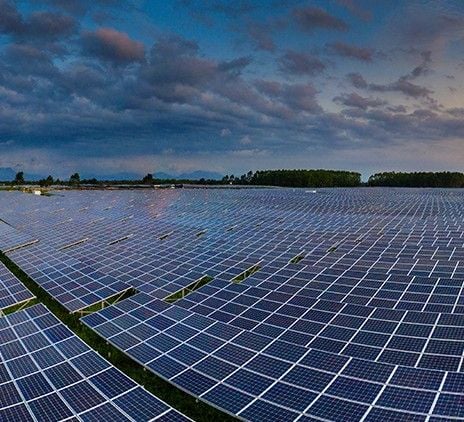
There is no doubt about it – Australia’s energy future will be one of increasing renewable capabilities.
The first bank in Australia, Bank of New South Wales, was established more than 200 years ago in 1817.
Australia produces a lot of food. We are a unique market in that we cannot consume everything that we produce – we must export.
Once upon a time, certainly in living memory, Australia had a thriving and diverse manufacturing sector.
The Life Sciences sector has never been more important or more in the public eye.
Modern Australia has a vibrant knowledge economy. Highly skilled lawyers, accountants, engineers, architects, consultants and business managers contribute not only to our own economy but to the global one as well.